#Road2Reading Challenge: The Essentials #3 - The Role Observation Plays in Reading

Yesterday, I spent a day in a room full of educators discussing literacy instruction for middle school students with learning disabilities. As someone who has training in the areas of early childhood education, elementary education, and special education, I don't pretend to be an expert on middle school or secondary instruction. When I am in a room full of secondary educators, I tend to listen more than I speak. However, the more time I spend with my colleagues in the secondary world, I am convinced that many of the same techniques and strategies are needed to develop readers at any age. 

At the institute, the focus of the day was on Structured Literacy, a term the presenters were using to describe the type of reading instruction required for students with dyslexia to learn how to read. Many of my literacy friends talk about and support Balanced Literacy and advocate for providing students with choice in reading and writing. The Structured Literacy supporters tend to believe that the Balanced Literacy approach is not intentional enough to provide the kind of structure needed by children with special needs. 

With all of my years in teaching, especially working in an urban community with many students who are English Language Learners and also a significant population of students with learning challenges, I often think we are missing out on some critical things as we search for the panacea that will unlock the key to learning how to read for all children. Reading instruction needs to start with teachers who understand all the various components to reading, including motivation and a safe environment for learning.

Structured or explicit instruction is often scripted instruction or programs in a box. I have seen many teachers implement direct instruction but fail to understand how all of the components fit together or how to teach children to generalize what they are taught. I have also seen teachers who fail to understand how Balanced Literacy is not just "flying by the seat of my pants" but requires planning and intentionality. I learned the structured instruction as part of Special Education training and the Balanced Literacy as part of my general education training, but it was as an elementary principal that I learned how to put the two together. 

Regardless of where we fall as teachers, a key to putting the two sides together and helping all students learn to read is observation. Observation provides teachers with a tool that is extremely powerful and often under appreciated. Observation takes time and effort, which can be hard when you have a large number of students on your caseload. Effective observation means I need to actually make the time to listen to a student as she reads aloud or engage in conversations about what a child is reading or puzzle out what pieces are missing in his learning. Observation helps me understand how two students that score essentially the same on a reading assessment can be two extremely different readers requiring different strategies and instruction.  Observation also helps me to identify what motivates a reader and where their interests fall. And what I learn through observation will make the difference in how I pick books for read alouds or what activities I choose for word study or what questions I ask to help a student comprehend what they are reading. Next time, you have an opportunity to observe a student read, channel your inner Sherlock Holmes, and go beyond the obvious to the core of what your student needs. 
At the end of January, I started a series on several of the essentials needed to create a strong reading environment in order to build a reading culture in your classroom. If you are interested in reading the first post, you can check out here and a follow up post on reading aloud, here.  And  don't miss, Michele Knott had a fabulous read aloud post that you don't want to miss and can find here

All journeys have a starting place.
This is a weekly place to find books and tools
that you may use with readers at the start of their reading journey.
Join in the conversation at #road2reading.

Do you work with readers who are starting their journey on the road to reading?  Join Michele Knott from Mrs. Knott's Book Nook and myself every Thursday as we explore books and ideas to help readers have a successful start to independent picture book and chapter book reading. If you blog or have a Goodreads page, please link up with us!

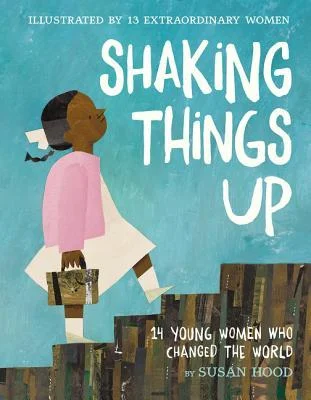
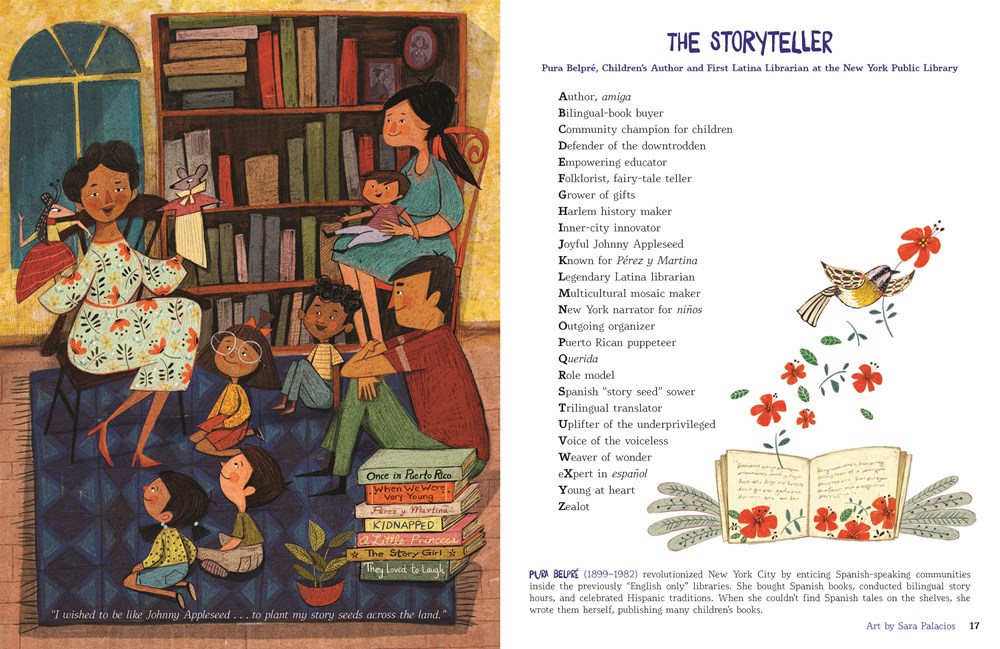
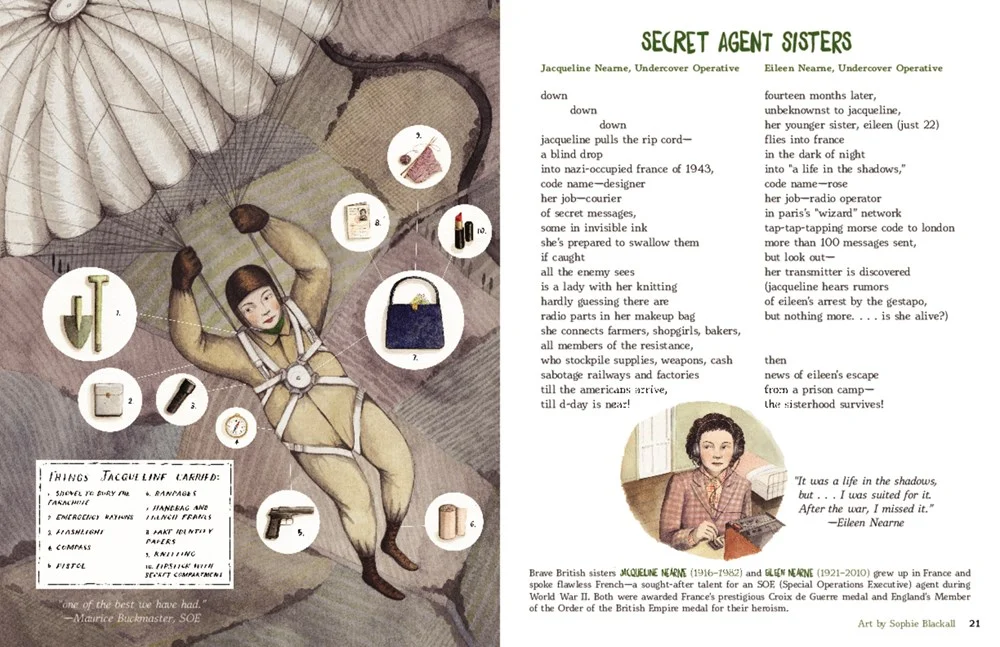
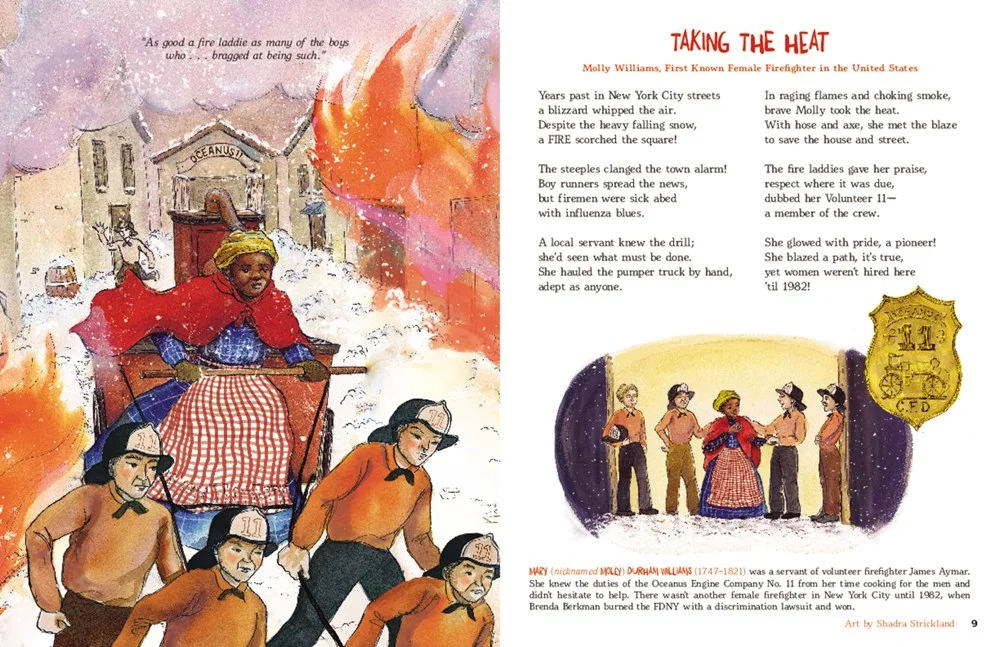
Nonfiction Picture Book Challenge: Women's History Month Continues

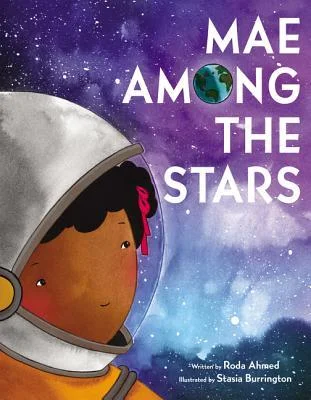
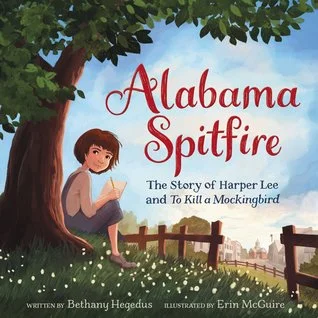
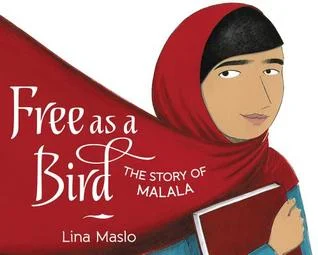
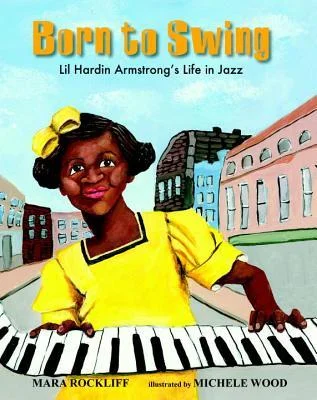
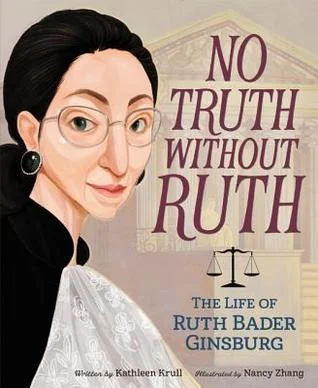
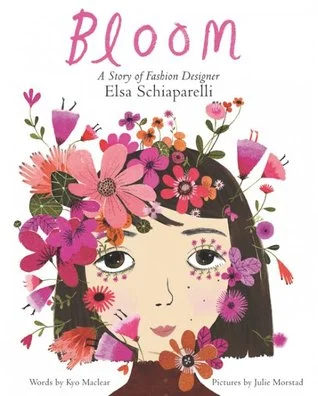
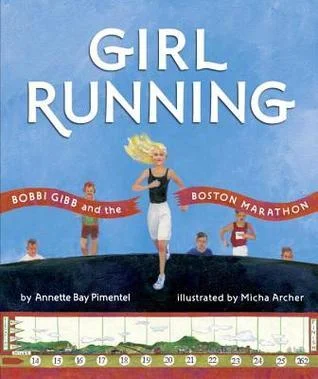
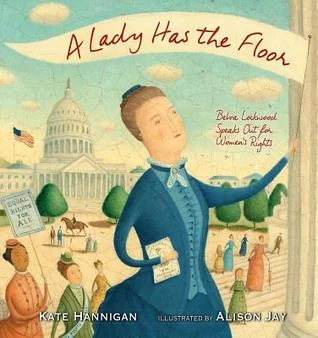
During the month of March, I dedicate my Nonfiction Picture Book Challenge posts to Women's History Month and focus on books that celebrate women and their contributions to our world. If you check out the National Women's History Month website, you will discover that their theme for 2018 is "Nevertheless She Persisted". 

Last week, I shared 18 picture books celebrating women that have been or are just about to be released in 2018. You can check out the post, here. This week, I continue to share titles that celebrate women but are longer in length. All of the titles below are from either 2017 or 2018. 

Happy reading...

Maya Lin: Thinking With Her Hands by Susan Goldman Rubin (Chronicle, 2017)

The Girl Who Drew Butterflies: How Maria Merian's Art Changed Science by Joyce Sidman (HMH Books for Young Readers, 2018)

Fly Girls: The Daring American Women Pilots Who Helped with WWII by P. O'Connell Pearson (Simon and Schuster, 2018) 

Roses and Radicals: The Epic Story of How American Women Won the Right to Vote by Susan Zimet (Viking Books for Young Readers, 2018) 

Votes for Women: American Suffragists and the Battle for the Ballot by Winifred Conkling (Algonquin Books for Young Readers 2018)

March Forward, Girl: From Young Warrior to Little Rock Nine by Melba Pattillo Beals (HMH Books for Young Readers, 2018)

Women Who Dared: 52 Stories of Fearless Daredevils, Adventurers & Rebels by Linda Skeers; Illustrated by Livi Gosling (Sourcebook Jabberwocky, 2018) 

For the Early Reader & Chapter Book audience....

A Girl Named Rosa: The True Story of Rosa Parks by Denise Lewis Patrick; Illustrated by Melissa Manwell (Scholastic, 2018)

A Girl Named Hillary: The True Story of Hillary Clinton by Rebecca Paley; Illustrated by Melissa Manwell (Scholastic, 2018)

You Should Meet: Roberta Gibb by Laurie Calkhoven; Illustrated by Monique Dong (Simon Spotlight, 2018) 

You Should Meet: Katherine Johnson by Thea Feldman ; Illustrated by Alyssa Petersen (Simon Spotlight, 2017)

And here are a few more picture books, just because I love picture books....

Joan Procter, Dragon Doctor: The Woman Who Loved Reptiles by Illustrated by (Knopf Books for Young Readers, 2018)

Write to Me: Letters From Japanese American Children to the Librarian They Left Behind by Cynthia Grady; Illustrated by Amiko Hirao (Charlesbridge Publishing, 2018) 

Marie Curie by Demi (Henry Holt and Co., 2018)

Long-Armed Ludy and the First Women's Olympics by Jean L.S. Patrick; Illustrated by Adam Gustavson (Charlesbridge, 2017) 

Margaret and the Moon: How Margaret Hamilton Saved The First Lunar Landing by Dean Robbins; Illustrated by Lucy Knisley (Knopf Books for Young Readers, 2017) 

And for the reader looking for adult titles...

If you are looking for some adult biographies on women, A Mighty Girl has a list of stories of Mighty Women published in 2017, check it out here

Artwork by Sarah S. Brannen ©2017

Don't forget to link up your nonfiction reviews...

#Road2Reading Challenge: What I am Reading

Recently, I have made piles of books I want to read. Each pile is a different category of books. I have a pile of nonfiction titles, a pile of books for Women's History Month, a pile of Middle Grade novels, a pile of miscellaneous picture books, and a pile of early readers and early chapter books. Now I wish I had more time to just read. However, this week, I was able to get to the following titles....

For second and third grader readers...

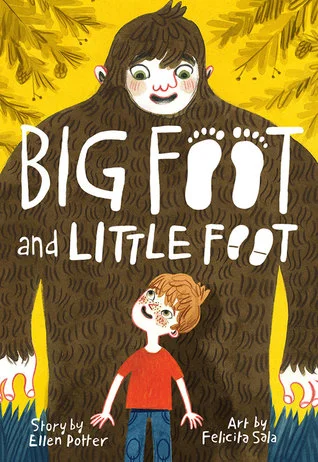
Big Foot and Little Foot by Ellen Potter; Illustrated by Felicita Sala (Amulet Books, April 10, 2018) - I never pass up on a book by Ellen Potter. I was excited to receive an advance copy of her latest book about a friendship between a boy and a sasquatch. I am now looking forward to the second book in this new early chapter book series. 

Gordon: Bark to the Future by Ashley Spires (Kids Can Press, May 1, 2018) - Fans of Binky and the P.U.R.S.T books will be excited by this latest title by Spire. Gordon must go back in time to help save his humans but when he realizes that his actions may have changed the present, he needs to figure out a way to make everything right again. Love this series.

For 3rd graders and older....

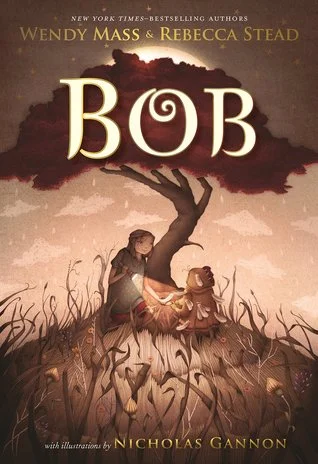
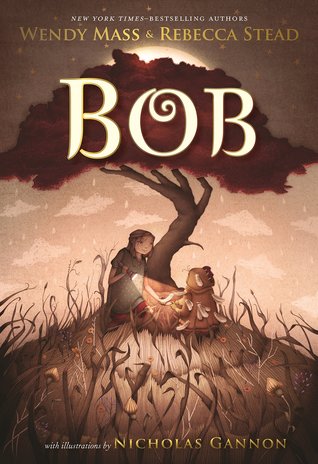
BOB by Wendy Mass and Rebecca Stead (Feiwel and Friends, May 1, 2018) - When this advanced reader copy showed up in my mail, I immediately knew I had to read it. How can you pass on a book by either Wendy Mass or Rebecca Stead? And to have a book written by both these amazing writers, well let's just say it made it to the top of the pile. It is also one of those books where you find yourself saying, just one more chapter.  To find out more about how Mass and Stead collaborated on BOB , check out this article from Publisher's Weekly here

Mark your calendar for these upcoming releases.

All journeys have a starting place.
This is a weekly place to find books and tools
that you may use with readers at the start of their reading journey.
Join in the conversation at #road2reading.

Do you work with readers who are starting their journey on the road to reading?  Join Michele Knott from Mrs. Knott's Book Nook and myself every Thursday as we explore books and ideas to help readers have a successful start to independent picture book and chapter book reading. If you blog or have a Goodreads page, please link up with us!