Nonfiction Picture Book Challenge: Guest Post with Seth Fishman

Recently, I listed my #mocksibert selections and placed A Hundred Billion Trillion on the list. This week, I am fortunate to have Seth Fishman stop by and share some thoughts about this book. Thanks Seth for stopping by and sharing your inspiration for the book. 

A Hundred Billion Trillion Stars
by Seth Fishman; Illustrated by Isabel Greenberg
Greenwillow Books (October 3, 2017) 

Before my son, Weston, was born, I took a plumbing class. At the time, I wasn’t sure if taking the class constituted a pre-parenthood freak-out, but I certainly had him in mind when I signed up.

My own dad, well, I can’t even remember what specific talents he had or taught me, aside from loving to read and an expectation of higher education. I don’t mean that disparagingly, I loved my father, but he wasn’t athletic, didn’t know how to fish, camp, ski, build toy airplanes, play computer games, fix cars, garden, play music, woodwork, sing, paint, cook or fix the plumbing.

When my wife became pregnant, I realized with growing terror that I, too, knew nothing. I admit that I partially blamed my dad.  I have friends who knew from a young age how to diagnose a problem with the family car. Friends who are familiar with classical music.  Friends who grew up water skiing and know how to use and maintain a boat. If only my dad cared about any of these things, made them family traditions, taught them to me.

This empty reservoir of abilities (and, potentially, talent) had me casting about for something I could learn, and fast.  Plumbing seemed within reach.  I took a course, I learned how easy (or at least, manageable) fixing things around the house could be. I felt more confident as a stereotypical father figure. I signed up for a wiring class soon after, and learned just how close deadly levels of electricity are in any given building or house. I changed the broken blinker light in our car, by myself.

And then Wes was born. I knew nothing about raising a kid. But that was OK. My wife and I figured it out together. And one day, as his warbles turned slowly into words, I realized I wanted to be able to give him every answer to any question he asked. I realized that my dad knew lots of stuff.  That he could satisfy my curiosity with explanations and stories. I realized that I was a writer because of him.

I remember, without hyperbole, looking up into the sky one night and wondering how I’d answer a hypothetical question my son might present to me. He’d ask, how many stars are in the sky? And me, trying to know everything, discovered that beautiful number: a hundred billion trillion. 

My picture book was born from its title, but grew out of a need to answer my child’s hypothetical questions about the world all around us.  And after giving him the biggest numbers that I could imagine, after showing him the world broken down into ants and bunnies and raindrops by the trillions, I wanted to make sure he realized that he was more than just another number. He was himself, special, his own pool of knowledge and talent and knowhow. Someday he’ll teach his own child everything he can. And that will be enough. 

About the author
Seth Fishman can hold his breath for 163 seconds and likes to blink about 15,000 times a day. He has also written 2 books for teenagers and has two more picture books coming out soon. He lives with his family in Los Angeles, California and works at The Gernert Company, a literary agency based in New York City. He represents a wide-range of clientele, from adult literary to webcomics to picture books. You can find Seth Fishman at www.sethasfishman.com or on twitter: @sethasfishman

Look for a copy of A Hundred Billion Trillion at your local indie bookstore or public library.

Artwork by Sarah S. Brannen ©2017

Don't forget to link up your nonfiction reviews...

Nonfiction Picture Book Challenge: Mock Sibert Predictions Part I

Before I jump into my Mock Sibert predictions, I want to share about a new resource.  If you don't already know about FROM THE MIXED UP FILES....Of Middle Grade Authors blog, I wanted to point out that they are now hosting STEM TUESDAY

Check back every Tuesday of every month:

  • Week 1:  STEM Tuesday Themed Book Lists
  • Week 2:  STEM Tuesday in the Classroom
  • Week 3:  STEM Tuesday Craft and Resources
  • Week 4:  STEM Tuesday Author Interviews and Giveaways

Now onto my post.
___________________________________________

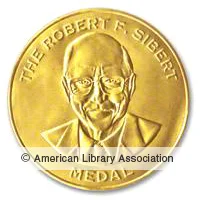
The Robert F. Sibert Informational Book Award goes to the most distinguished informational book published in the United States. To be honored/win the Sibert Award, the book must include these important elements and qualities:

  • Excellent, engaging, and distinctive use of language.
  • Excellent, engaging, and distinctive visual presentation.
  • Appropriate organization and documentation.
  • Clear, accurate, and stimulating presentation of facts, concepts, and ideas.
  • Appropriate style of presentation for subject and for intended audience.
  • Supportive features (index, table of contents, maps, timelines, etc).
  • Respectful and of interest to children.

In addition to the qualities above, you can find further criteria here.  This is where things can get tricky.  One of the criteria is that the author and illustrator must be a citizen of the United States or maintain a residence in the United States. Sadly, this usually rules out a couple of books each year.

Another important consideration is how the Sibert defines informational book. "Informational books are defined as those written and illustrated to present, organize, and interpret documentable, factual material."

A final consideration that I will highlight is how the Sibert defines "children's literature". 

"Children’s literature is defined as the body of books published for an intended and potential child audience.  Such books display respect for children’s understanding, abilities, and appreciation.  Children range from birth through age fourteen.  Books for the entire range are to be considered."

As an aside, this is NOT my Nonfiction Best Of list for the year. Check back later in December for my favorites of the year.  

For this list, I looked back over the previous winners to see about any trends and to get a sense for what has been considered excellent nonfiction.  I am a bit worried that given last year's winners that this year's winners will skew older and longer than picture books. I am worried that I either haven't read the winner yet or that what I am loving are not viewed the same by the committee. What I am hoping is that I have provided you with a list of books that will provide you and your students with a great opportunity to read fabulous books and compare them to the list of criteria and see what you decide. And hopefully we just might find a winner. 

Are you ready? Here are my mock Sibert picks in no particular order...

Danza!: Amalia Hernández and El Ballet Folklórico de México by Duncan Tonatiuh (Abrams Books for Young Readers)

Muddy: The Story of Blues Legend Muddy Waters by Michael James Mahin, Illustrated by Evan Turk (Atheneum Books for Young Readers)

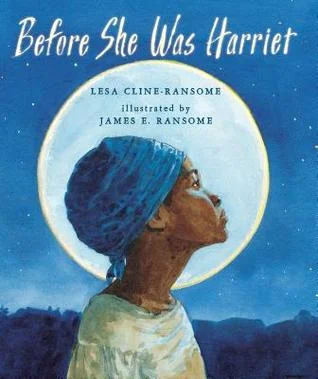
Before She Was Harriet by Lesa Cline-Ransome, Illustrated by James Ransome (Holiday House)

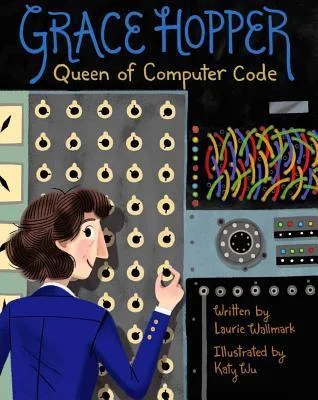
Grace Hopper: Queen of the Computer Code by Laurie Wallmark, Illustrated by Katy Wu (Sterling Children's Books)

Grand Canyon by Jason Chin (Roaring Brook Press)

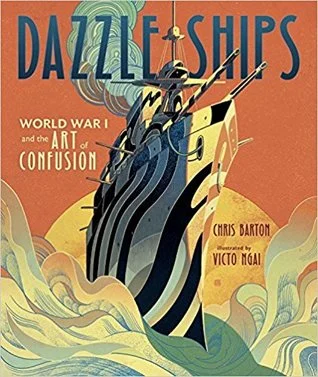
Dazzle Ships: World War I and the Art of Confusion by Chris Barton, Illustrated by Victo (Millbrook Press)

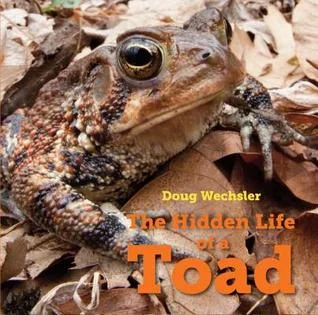
The Hidden Life of a Toad by Doug Weschler (Charlesbridge Press)

A Hundred Billion, Trillion Stars by Seth Fishman, Illustrated by Isabel Greenberg (Greenwillow Books)

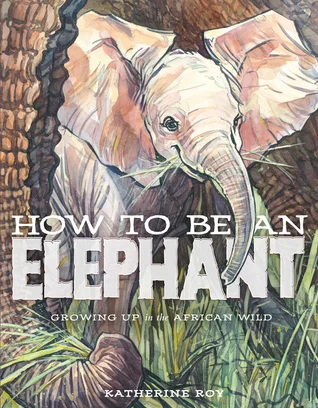
How to Be An Elephant by Katherine Roy (David Macaulay Studio)

And two bonus books just for fun and because I really like them...

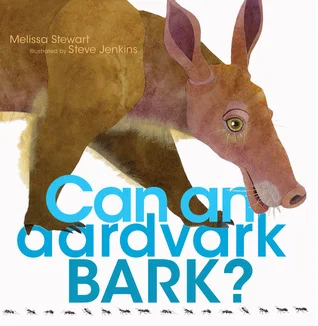
Can an Aardvark Bark? by Melissa Stewart, Illustrated by Steve Jenkins (Beach Lane Books)

Previous posts to check out:
My Mock Sibert Info Post | Melissa Stewart's Sibert Smackdown Post | My early thoughts on Mock Sibert | Michele Knott's Sibert Smackdown Post

Check back next week for some long form nonfiction picks.

Artwork by Sarah S. Brannen ©2017

Don't forget to link up your nonfiction reviews...

#Road2Reading Challenge: Holiday Chapter Books

The holiday season is in full swing, and I started to think about holiday chapter books. HarperCollins has re-illustrated and re-issued the Christmas Stories from the Little House Books by Laura Ingalls Wilder. I remember reading the full series when I was nine years old and being struck by the simplicity and joy in the Christmas celebrations by Laura and her family. How a stocking with an orange and some nuts and a candy cane was celebrated with great enthusiasm and sincere appreciation. 

Christmas Stories: Little House Chapter Book #5 by Laura Ingalls Wilder, Illustrated by Ji-Hyuk Kim (Re-illustrated edition, HarperCollins, August 2017) 

Another favorite that I actually discovered years after it came out was Barbara Robinson's The Best Christmas Pageant Ever. How can you not fall in love with the Herdman's? I think I appreciated this story more as a young teacher than I would have as a child. 

The Best Christmas Pageant Ever by Barbara Robinson, Illustrated by Judith Gwyn Brown (HarperCollins, 1988 - other editions by other publishers beginning in 1972)

Both of these books are perfect independent chapter book reads for 2nd and 3rd graders, but can be enjoyed as read alouds for younger children or revisited by older readers who want a moment of nostaglia. 

If anyone has a favorite holiday chapter book that features holiday traditions other than Christmas, can you include the title in the comments? 

All journeys have a starting place.
This is a weekly place to find books and tools
that you may use with readers at the start of their reading journey.
Join in the conversation at #road2reading.

Each week, Michele Knott and I post about new early readers and transitional chapter books.