YA Friday Summer update!

Having completed my first year of college, I am ready to get back into my summer reading patterns (when I spend the day doing very little besides consuming books and food). You can also look forward to a new summer reading challenge (which I'll be posting about shortly), but part of it involves reading as many books that I already own but haven't read. So, I'm focusing on reading series (so that I can finally read the last book), as well as other recent releases - but eventually, I'm planning on shifting over to the massive amounts of stand-alone ARCs I own. Here are some of the books I've been reading since I came home a week ago, as well as the rest of my massive TBR stack (or, at least, just the part of my TBR stack that fits on my nightstand):

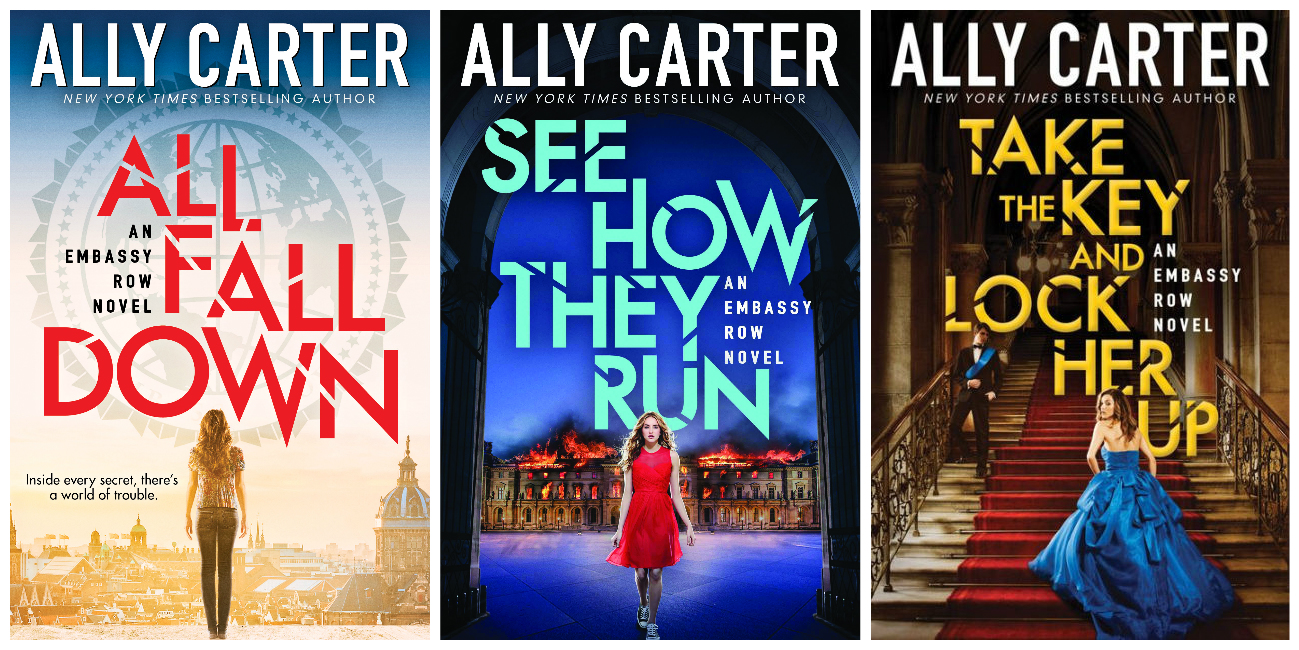
The Embassy Row series

Ally Carter has long been adored for her YA series (starting with her Gallagher Girls series), but her latest series - Embassy Row - is probably my favorite yet. I reviewed the first two installments in the trilogy, All Fall Down and See How They Run, and am greatly looking forward to finishing off the series with the third and final book, Take The Key and Lock Her Up

The Winner's Trilogy:

The Winner's Crime is one of those rare sequels that manages to outshine its predecessor (as I noted in my review), so I'm very intrigued to finally read The Winner's Kiss. However, the complicated politics and history (all a part of Rutkoski's intense world building) are so integral to the plot that I am definitely going back to the beginning and rereading The Winner's Curse.

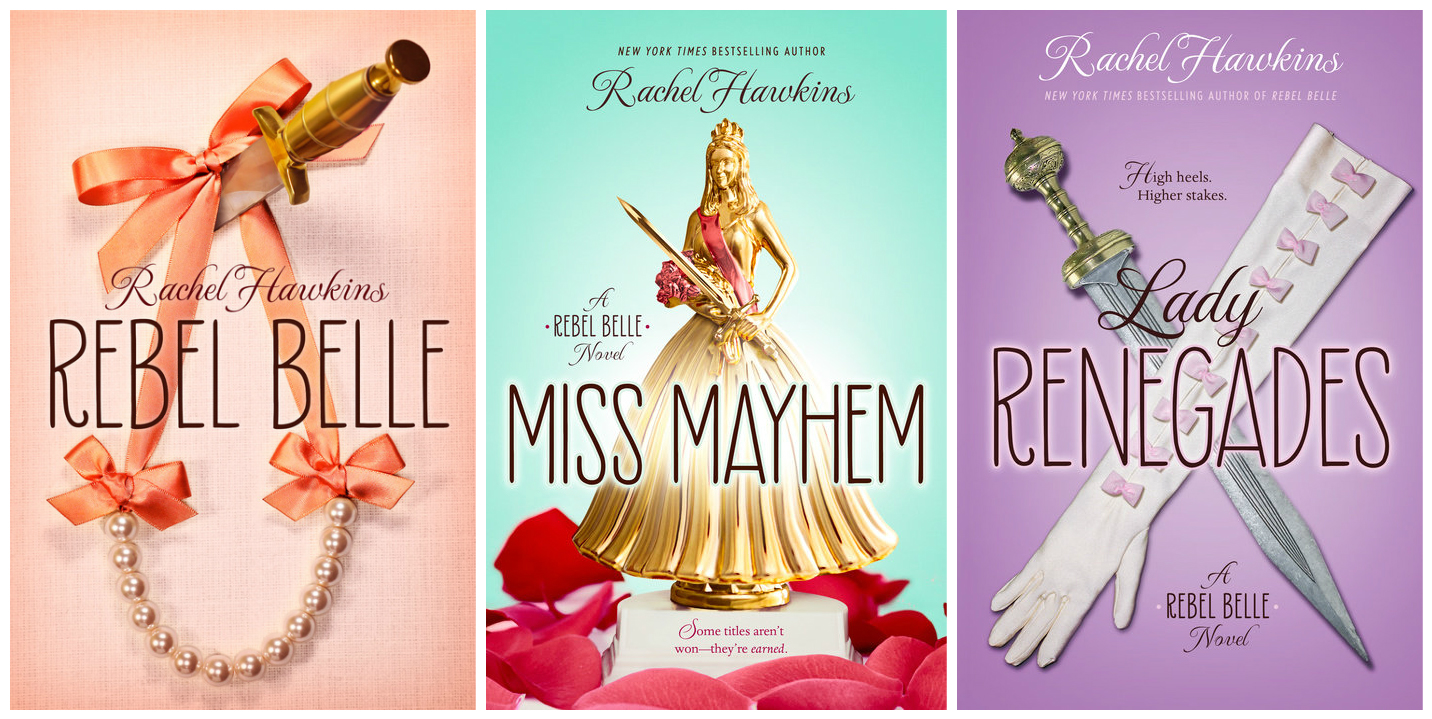
The Rebel Belle series:

The premise of the Rebel Belle series is pure comedic gold - a Southern debutante turned ancient guardian/warrior of an oracle (who of course is her arch nemesis) - but Rachel Hawkins manages to build a lovable cast of characters, and it is the characters and their emotional development (amidst the crazy-yet-hysterically-funny circumstances) that carries the series.

The Wrath & the Dawn series:

Easily one of my favorite fairy-tale retellings, The Wrath & the Dawn sets up a captivating and complex story that is finished in The Rose & the Dagger. I love trilogies, but I also love duologies - while I always want more books in the series, I do appreciate authors who have a specific plan for their series and stick to it (even if it means less total books). But if two books aren't enough for you, Renée Ahdieh released three different short stories: The Moth & the Flame, The Crown & the Arrow, and The Mirror & the Maze (two prequels, and one short story set in between the two main books, respectively).

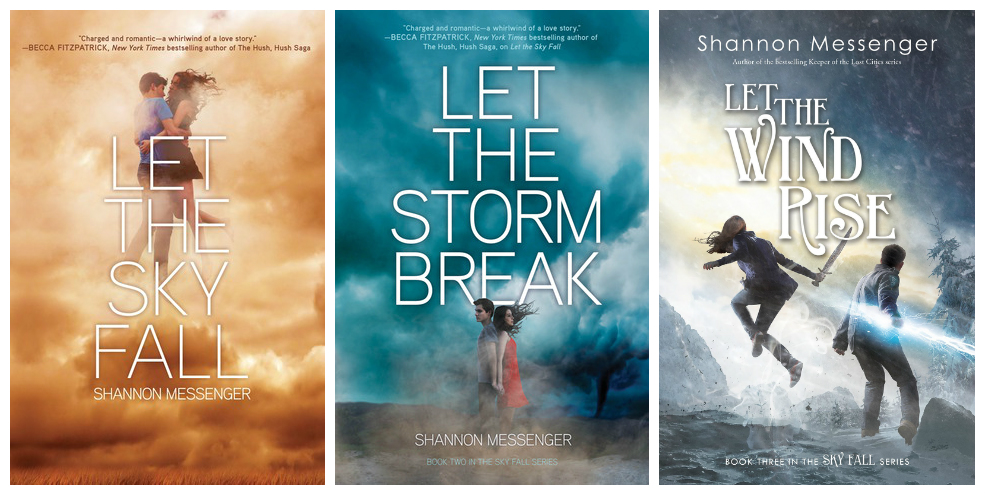
The Sky Fall series:

While I do adore Shannon Messenger's Keeper of the Lost Cities series, I tend to prefer young adult books (rather than middle grade); when she released a young adult fantasy series (The Sky Fall series), I was overjoyed. While that joy is now bittersweet, knowing that the trilogy has come to a close, I am very excited to finally finish the series. 

The Metal & Lace series:

Though Arthurian legend is always popular in pop culture (*cough* Merlin *cough*), it tends to be less prevalent in the YA fairy tale retelling genre than other classic stories. So I was thrilled to dive into the first two books of the Metal & Lace Trilogy a couple of summers ago, but I haven't been able to get my hands on a copy of the third and final book, Excalibur Reigning - until now. I've been looking forward to finishing this series for a while now (I have a soft spot for steampunk, especially steampunk fairy tale retellings - you can check out more details about the series in my review of Avalon Rising).

What are you reading this summer? Let me know in the comments, or tweet me your summer reads @YALitFrenzy on Twitter.

Carolyn is a teen blogger who shares her favorite YA reads and favorite book related finds with readers on Fridays.

Nonfiction Picture Book Challenge: A Personal Vent About Nonfiction and Page Requirements

For those of you who know me well, in real life, you have probably experienced one or two of my rants about any number of topics. However, on this blog, I typically refrain from a long winded rant about anything. Yet, there is one topic that will get my blood pressure to rise. The dreaded nonfiction book report. 

A friend posted on Facebook
Last report of the year, non fiction oral book report- must be at least 150 pages. We like these 3 options but before we settle, any Middle Grade Non-Fiction recommendations out there?

My first reaction was...what grade are we talking about? Any particular topics? Are we talking about an 8 year old or a 12 year old? But what really jumps out is the page requirement.

And then the rant starts building within and spews forth. 

Let's talk adult nonfiction for a moment....

Language at the Speed of Sight by Mark Seidenberg (Basic Civitas Books, 2017) -
Total number of pages 384.
Print: tiny
Whitespace: very little

Reading this book, despite my already having a decent grasp on how people learn to read, is slow and laborious. I might not finish it. Maybe I will pick and choose chapters. It might take me weeks to work through this one. 

Now let's talk about adult fiction....

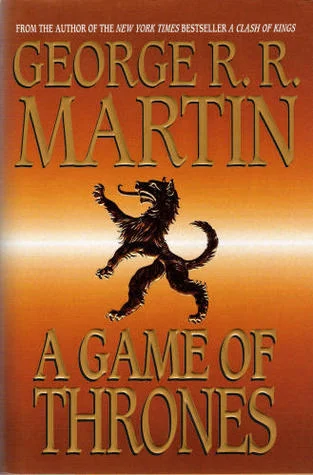
A Game of Thrones ( A Song of Fire & Ice, Book 1) by George R.R. Martin (Bantam, 2005)
Total number of pages 835
Print: small
Whitespace: little

On the other hand, an 800+ page fantasy adventure may be devoured in a few days. Double the number of pages as the nonfiction title but much easier to sit and read. 

Which of these could I probably get busy teachers to read over the summer? Though there might be some who would dive in and stick with The Language at the Speed of Sight, I would have better luck getting them to read the fictional title (or a fictional title).

The reality...if I asked a group of teachers to read something for professional development, I would have more luck with something like the book below.

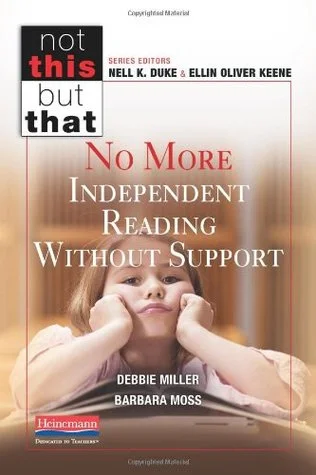
No More Independent Reading Without Support by Debbie Miller & Barbara Moss (Heinemann 2013)
Total number of pages 87
Print: comfortable
Whitespace: Fair amount

This is a more comfortable and practical read and takes about 90 minutes. Yet it is the tenth of the length of the fictional novel. 

So, if as adults, much of our nonfiction that we consume is sometimes a half to three-quarters shorter than the fiction we read, why do we expect that children should read nonfiction with the equivalent pages of a fictional story? 

Let's go back to my friend's post. Turns out that the teacher was expecting third graders to read a nonfiction book that is 150 pages long. And this is where I start to sputter and go all crazy. 

Let's take a look at a children's nonfiction title:

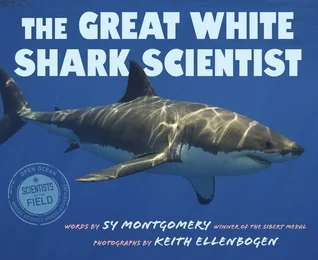
The Great White Shark Scientist by Sy Montgomery; Photographs by Keith Ellenbogen (HMH Books for Young Readers, 2016) 
Total Number of pages 80
Print: comfortable
Features: Variety of nonfiction text features, including photographs

Technically by the teacher's standard, the student would not be able to read this book for his or her report. Yet, the reading level of this book is really more for 5th graders and up. And the interest level for sharks would be high. 

Here are a few other titles...

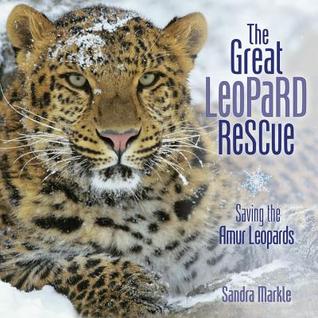
The Great Leopard Rescue: Saving the Amur Leopard by Sandra Markle (Millbrook Press, 2016)
Total number of pages: 48
Print: comfortable
Features: A Variety of nonfiction text features, including photographs

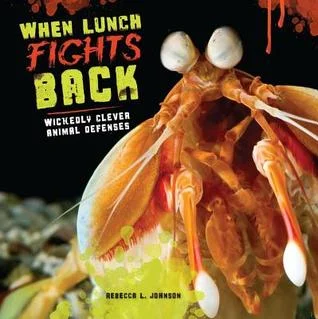
When Lunch Fights Back: Wickedly Clever Animal Defenses by Rebecca L. Johnson (Millbrook Press, 2014) 
Total number of pages: 48
Print: comfortable
Features: Variety of text features, including photographs

Even reading both of these book, which would be a challenge for some third graders, would not come close to the amount of pages that the teacher is requesting for her report. However, either of these books would be challenging, engaging and informative reads for a third or fourth grader.

From a publisher's perspective, books are printed in standard offset printing with page lengths in multiples of 8. So a picture book is typically 32 pages. Many of the current day, quality nonfiction for children 3rd to 7th grade fall within the 48 to 96 pages.  Much of the longer nonfiction that is 150-250 pages long are often not the right content matter or style for an 8 or 9 year old, even for those that are a bit more advanced as readers or who posses a better stamina. 

When a teacher makes a requirement like the 150 pages, s/he is greatly eliminating appropriate choices for most of his/her students and possibly creating a frustrating situation for the students. 

I have come to realize that teachers at schools where there are no librarians and little exposure to new nonfiction titles are unaware of the books that are out there and also unaware of how publishers format books for children. We need to continue to spread the word about the titles that we are sharing as part of this challenge. Stop by next week and check out Part II of this post, where I identify some of my favorite titles for 3rd and 4th graders that you can share with teachers. 

Artwork by Sarah J. Brannen @2017

Don't forget to link up your nonfiction reviews