Blog Tour & Guest Post: Amy Timberlake

I am excited to welcome author, Amy Timberlake to the blog today.  Her new book ONE CAME HOME was released on January 8th.  Check out her blog tour for more great interviews and guest posts.   Here's what Amy had to say:

Recently, there was an on-line discussion amongst a group of teachers identifying periods of history that seem to be ignored in children’s literature. I have to admit that my knowledge of Wisconsin history and the “pigeoners” is limited and for me added to the excitement of reading ONE CAME HOME. What motivated you to write a story set in 1870’s Wisconsin and particularly focused on the “pigeoners”? 

Sounds like a great discussion—wish I could have listened in!

By the way, I get the sense that hardly anybody knows about the 1871 passenger pigeon nesting in Wisconsin—so there’s no shame there!

For me, it was a happy convergence of interests that led to writing about the passenger pigeons, the pigeon hunters (the “pigeoners”) and Wisconsin’s passenger pigeon nesting of 1871. For instance, I love history; I love novels set in the Midwest; and I’m a birder. (Yes, I’m actually one of those folks up at dawn watching birds. My husband and I do the whole deal—a pocket bulging with The Peterson Guide, binoculars in hand. We yell out to each other, saying phrases like “Yellow crown! Bandit mask! Red Rump!” It’s quite hilarious!)

Anyway, you can imagine that a person like me might read a book on birds every once in awhile—and I do. So One Came Home began because I was reading A.W. Schorger’s history of the now-extinct passenger pigeons.

Now Schorger’s book is a scholarly work, published in the 1950s by the University of Wisconsin Press. Picking it up, I expected dry, fussy prose wrapped around a lot of charts. But I thought I’d find something to like because I like birds.

 It was a scholarly book—tables, charts, an endnote section as thick as the text—but I was riveted. Here was this history that read like something straight out of science fiction. I mean, a billion birds the size of crows? Add to this that they flew at 60 mph and my imagination just stopped working. But wait, there was more: Sometimes passenger pigeon migrations darkened the sky for days. As these birds passed overhead, everyday folks were shooting at them from their windows and hitting twelve birds at one pop. These birds were so loud that as they passed you couldn’t hear a thing. Their dung dropped from the sky like sleet. This was weird, weird stuff!

So I’m reading this—and reading bits of it out loud to my husband because I cannot believe it—and I turn the page, and there, on the page, is a map of this huge passenger pigeon nesting in Wisconsin in 1871. (850 square miles?!?) It just floored me. I grew up in Wisconsin—this was my state—and I knew nothing of this. I couldn’t stop thinking about it. I started writing about it. And that was the real beginning of One Came Home.

Yeah, I had a few story ideas knocking around in my head earlier, but I didn’t put much of it on paper until I happened to read about this, crazy, jaw-dropping, maybe-a-billion-birds, 1871 nesting. I knew then where this story was going to be set. It was going to set in my home state of Wisconsin, and I was going to put a small, fictional town right next to this monstrous nesting. I’d have this living, breathing, science-fiction-like (but historical) setting. How could I resist?

 I should add—in case readers of this interview think that the book is all about passenger pigeons—that One Came Home is a western with a mystery in it. (It also qualifies as historical fiction. Yeah, that’s a lot of genres, but I swear it’s the truth!) Anyway, the story is told in the voice of thirteen-year old Georgie Burkhardt who leaves home in order to find her sister. Everybody else says her sister is dead, and has good reason—after all, there has been a funeral. But Georgie refuses to believe it and so sets off.

Georgie Burkhardt is a wonderful character. Was she based on anyone specific or did you just have fun creating her? 

I’m glad you liked her – that’s good news!

Let’s get this off the table first: There is a lot of me in Georgie. Deep down, I’m stubborn and sure I’m right. I know it’s silly, and half the time, it’s plain dumb, but there it is. I think I’m pretty good at hiding this though, so you shouldn’t worry about meeting me.

 Georgie is also derived from a character named Miss Illene Viola Wiggins who appeared in my novel, That Girl Lucy Moon. Miss Wiggins is a powerhouse. She’s a businesswoman and philanthropist in her late 60s who owns the town’s primary business. When I discovered I was still thinking about Miss Wiggins after that novel was published, I asked myself what she might have been like as a thirteen year old. From that question came the first versions of Georgie Burkhardt.

Can you identify one research technique that you use that a classroom teacher may be able to adopt as a writing exercise with students?

Well, I love primary historical documents (and by that I mean documents that were written by someone from a particular time period). For instance, in One Came Home, I quote from a period book, Captain Randolph B. Marcy’s The Prairie Traveler.

So I’d suggest doing a writing exercise that begins with a primary document. Say you have an old photograph of several people—you can ask the students to put themselves into that photograph and imagine that world. Ask the students to write quickly about the relationships between the people. Ask them to write about what they imagine the people are thinking. Ask them to imagine what these people do ‘for fun.’ (Maybe one of them doesn’t look like they have any fun at all. Why not? Write about it!) Tell them to imagine the sounds these people hear, the things they can feel, what they’re looking at—remind them to use all their senses. Ask them to pick a person and make a list of the important objects in that person’s life. Tell them to jot down any questions they’d like to ask these people.

The students won’t get everything ‘right,’ but misinterpretations can be the start of a good conversation, or the beginning of a research project. Personally, I like learning history this way. I’m not great at dates, names and places, but if I’ve seen a photograph, or read a letter, the rest of the history sticks.

One thing I am always curious about is the writing habits and writing space of authors? Some work in their home or a writing space, and others in coffee shops. Some like music playing in the background and others have special snacks or beverages. Tell us a little bit about your writing space and habits.  

It helps if I write regularly. That’s the biggest thing for me—to write regularly. If I don’t do it regularly I lose the threads of my plot. So I try to write four hours a day consistently. I take one day off a week.

 I have an office, and my own desk. I’ve got a door I can shut. But I’ve worked in lots of crazy places, and have strategies for each. I’ll say this: I love owning a laptop.

As for practices: When it’s an early draft, I can listen to music. But later, when I’m working at the sentence level, I need silence because I need to be able to hear the rhythm of the words. I also do a lot of reading out loud to hear the voice of the book.

At the end of my process, reading out loud is the only thing I trust to make sure the words are hitting their marks. I’ve found that when I read in my head (which goes much, much faster and is therefore tempting) I’ll add words, rhythms, beats that aren’t there. When the editor and I are sending a manuscript back and forth, I often go hoarse from reading out loud.

What book would you identify as being the book that turned you into a reader or inspired you to become a writer? 

William Faulkner’s As I Lay Dying. It was required reading in high school, and I just got it in a sort of primal way. The voices were so specific and regional. In addition, I had never before considered that a narrator in a book might be unreliable. Wow. It blew me away.

If you could spend the day with your favorite character (from any book – doesn’t have to be one of your own characters), who would it be and what would you do for the day? 

 I would love it if Tolkien’s Gandalf would drop by to set me off on an adventure. Would you let him know I’m interested, please?

What is the question that you most frequently get asked by children who write to you?

“Are you going to write another book about Lucy Moon?” Man, that is such a compliment!

If we were to get a peek at your “To-be-read” pile, what titles would be see in the stack of books? 

I love this question! Last year, I was curious about how many books actually passed through my hands, so I kept track on Goodreads. You can go see it! I summed up my reading here: http://amytimberlake.com/blog/12/1/2012/amys-2012-book-list-new-years-resolution.

Current list?
• Right now, I’ve got a bunch of cookbooks waiting to be read and tried. I want to learn to make artisan bread, my own mustard, and maybe ferment something. (Cider? More mead? Haven’t decided.)

• I’m reading a lot of Thomas Merton. Going to read The Seven Storey Mountain—finally!

• I need to finish Michael Pollan’s The Omnivore’s Dilemma. I’m at his fourth meal, so nearly there.

• I’m reading a mystery that I picked up because the cover was so beautiful: Kevin McCafferty’s The Royal Wulff Murders. I’m a sucker for covers, but this one doesn’t disappoint—it’s good so far!

• I will be doing some reading for a Kindling Words conference I’m going to in January, so add William Alexander, Natalie Babbitt, and John Green to the list.

• And I’m going to read Elizabeth Fama’s Monstrous Beauty. She’s a friend of mine and I can’t wait to read it because I heard early excerpts. Yay! Okay, that’s a startlingly large list for “what’s next.” Clearly this is an eyes-bigger-than-stomach situation. Does your list get this big?

Hey, as long as we’re bringing Gandalf into my life (see earlier question) maybe he can arrange for more time to read . . . What do you think? (I think my own list just got longer. *sigh*)

Thanks for this interview! This was fun!

Amy Timberlake grew up in Hudson, Wisconsin. She has an M.A. in English/Creative Writing from the University of Illinois at Chicago, where she’s also taught writing. She’s worked as a book reviewer, a book event coordinator, and as a children's bookseller. Her previous books include That Girl Lucy Moon and The Dirty Cowboy. The Dirty Cowboy was illustrated by Adam Rex and won SCBWI's Golden Kite Award. That Girl Lucy Moon was chosen as a Book Sense Pick, a NYPL’s “100 Titles for Reading and Sharing,” a Bank Street Best Children’s Book of 2007, an Amelia Bloomer Book, and the winner of the Friends of American Writers Literary Award. Amy Timberlake lives with her husband in Chicago. Learn more about her life and work at her website: www.AmyTimberlake.com.

Amy also has a great Pinterest page about passenger pigeons: http://pinterest.com/amytimberlikes/imagining-passenger-pigeons/

Amy's next stop in the blog tour:  January 14th over at  http://sharpread.wordpress.com/

Thanks to Blueslip Media, I am able to offer a copy of ONE CAME HOME to a reader who lives in the United States.    a Rafflecopter giveaway
Nonfiction Picture Book Releases - January 2013


As part of the Nonfiction Picture Book Challenge, I try to post new releases for the month.  Here are a list of titles that I found being released in January 2013.  Books marked with an asterik (*) indicated full length chapter books for grades 5 to 8.


January 1, 2013


*Yoko Ono: Collector of Skies by Nell Beram, Carolyn Boriss-Krimsky (Scholastic)


*Lincoln's Grave Robbers by Steve Sheinkin (Scholastic)

January 2, 2013


Nelson Mandela by Kadir Nelson (Katherine Teegan Books)

January 8, 2013


The Price of Freedom: How One Town Stood Up to Slavery by Dennis Brindell Fradin, Judith Bloom Fradin; Illustrated by Eric Velasquez (Walker Children's)


A Splash of Red: The Life and Art of Horace Pippin by Jen Bryant; Illustrated by Melissa Sweet (Knopf Books for Young Readers)


You Never Heard of Willie Mays?! By Jonah Winter, Terry Widener (Schwartz & Wade)

January 22, 2013


*Courage Has No Color, The True Story of Triple Nickles: America's First Black Paratroopers by Tanya Lee Stone (Candlewick)


Henry and the Cannons: The Extraordinary True Story of the American Revolution by Don Brown (Roaring Brook Press)


Brave Girl: Clara and the Shirtmakers' Strike of 1909 by Michelle Markel; Illustrated by Melissa Sweet

January 29, 2013


Peace by Wendy Anderson Halperin (Atheneum)

The links for the above books will take you directly to the Indie Bound's webpage for purchasing information, unless otherwise noted. Please note, I do not make anything off these links or profit in anyway from posting the links. If you know of a book that should be included in this list, please include the title and author in the comments section and I will update the list.  

If you have posted any nonfiction book reviews, please link them up with this post:

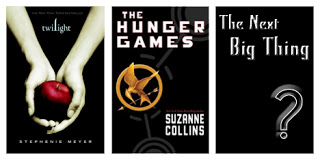
Guest Post: What's the Next Big Thing in YA Literature?

What is The Next Big Thing in YA literature? Is it angels? Mermaids? Garden gnomes? In November I spent three days in St. Louis with a gaggle of librarians and authors who tried to answer this very question at the YALSA Literature Symposium. And what did we decide?

No one knows.

Seems like a disappointing end to three days worth of conversations, doesn’t it? But you know what? It isn’t. In fact, it’s some of the best news I’ve heard in a long time.

Since I work both as a librarian and writer, I know what it’s like to feel the pressure to find The Next Big Thing. I’ve spent a million hours worrying whether or not I’ve bought the right books for my collection or if that new story idea will become/still be mainstream once I get it written. I’ve read industry articles and blogs and followed conversations on social media sites in an attempt to spot trends early on. Heck, I drove all the way to St. Louis (a city in which both Mello Yello and sweet tea are scarce) to get ahead of the curve.

Quite frankly, I’m exhausted.

At some point, and I’m not sure when it was, I began obsessing over trends instead of books. I wanted to be the cool librarian who always recommended the hot new book before anyone else. I wanted to become the writer who released a book at just the right time instead of a few years too early or too late. I worried about popularity and numbers instead of what is truly important... the story.

What I took away from St. Louis was that trends are unpredictable. Who knew a year ago that I wouldn’t be able to keep bondage erotica on the shelf at my small town Kentucky library? Small town Kentucky. Bondage erotica. It’s crazy! And it came out of nowhere. Why? How? Because people got so attached to the story, they told their friends. And those friends read it, became attached, and told their friends. It went on and on until you couldn’t turn on a morning talk show without hearing the words “Fifty Shades”. Could anyone have predicted it was going to happen? I don’t think so. Because you can’t predict emotional responses to books, and those are what make The Next Big Thing happen. Writers, editors, and marketing specialists might be able to somewhat steer popular taste, but it takes passionate readers to create a trend-setting phenomenon.

So, what does that mean for those of us whose job it is to be on top of book trends? What are librarians, teachers, and writers supposed to do? I think the answer is simple. Find the passion. Read books that set you on fire, and then tell others about them. Buy books that excite you, and then hand sell them to your patrons and students. Write the stories that are clawing to get out of your brain. Don’t worry about what is supposed to be The Next Big Thing, focus on the thing right now that gets under your skin and won’t let go. Maybe that book you’re telling every person who will listen about will become the next every-human-must-read-it-and-watch-the-blockbuster-movie book, and maybe it won’t. It doesn’t matter. What matters is getting excited about books and spreading that excitement. The rest will work itself out. And if you end up feeling blindsided by that garden gnome trend, don’t worry about it. Most of the rest of us will be scratching our heads and wondering where it came from, too.

Thanks to Miss Tammy for sharing your insights. Tammy Blackwell is the Young Adult Services Coordinator for a public library system in Kentucky. When she's not reading, writing, or cataloging books, she's sleeping. She is the author of the YA Novels -  Destiny Binds, Time Mends, and Fate Succombs .

You can follow Tammy on twitter: @miss_tammy or check out her website: www.misstammywrites.com

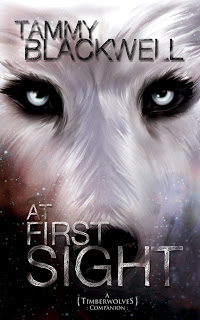
Tammy has a special treat for fans of her Timber Wolves Trilogy - From January 4th to 6th, At First Sight: A Timber Wolves Companion will be available as a free download for Kindle on Amazon.  It is a wonderful peek into her fabulous characters.

Nonfiction Picture Book Challenge 2013


Last year, I had a goal to read more Nonfiction Picture Books.  As a way to hold me accountable, I helped set up the Nonfiction Picture Book Challenge (#NFPB2012).

In 2011, I read 55 nonfiction picture books.  In 2012, with the challenge, I read 86 nonfiction picture books and 6 more nonfiction MG/YA books of longer lengths.  With the coming of the Common Core State Standards (CCSS) and the emphasis on nonfiction or informational text, I feel the need to keep on top of what is being released.   Since I had a lot of fun with this challenge last year, I am hosting it again this year.

My goal will be to read as many 2013 nonfiction picture books that I can find and try to increase my reading of MG/YA nonfiction books of longer lengths.

Here are the details if you would like to participate in the challenge:

 1. Set a goal as to how many nonfiction picture books (or nonfiction MG or YA books)  you would like to read over the course of 2013. Maybe you want to read one a month or one a week. Will they all be from 2013 or will you be reading ones previously published? Set a goal that will be fun and not stressful.

2. I will be posting my nonfiction book reviews and posts on Wednesdays.  There will be a link if you want to connect up one of your reviews or progress towards your goal.

3. There may be giveaways. Keep an eye out for details.

4. If you would like to participate in this challenge, please link up your blog or GoodReads Shelf using the Widget below.

5. If you tweet about what you are reading as part of this challenge, please use the twitter hashtag #nfpb2013.

6. Finally, feel free to grab one of the Challenge images used in this blog post. I am working to get the html for bloggers to grab the badge for their websites. Good luck everyone and happy reading in 2013.


Link up with your blog:

Adventures in 2013


Recently, I have heard a number of people say that they were happy to see 2012 end and were hoping that 2013 would bring better things.  I then saw a post on Facebook from my cousin and she made a comment about resolutions that really struck me. 

"If you made 10 and you kept one, then you were one better than you were the year before. Maybe you said you'd quit something or start something for the eighth year in a row, but this is the year it finally clicks and sticks for you. I say, it's best to approach each new year hopeful and optimistic that something wonderful will happen. Pick yourself up, dust yourself off, start all over again."  
I think it is easy to focus on the 9 things that you didn't do or change and forget the 1 thing that you did change.  With this in mind, I want to think of 2013 as an adventure rather than a year filled with resolutions.  Rather than create a list of things I should be doing and then "beating myself up" when I don't do them, I plan to think about life this year as an adventure.  Life hasn't felt like an adventure in a long, long time.  Adventures are filled with hope, and a sense of excitement, and surprise.  It is time to get back to a sense of wonder and excitement.  The only condition for this adventure - to make the most positive choice I can make at that moment with the information I have or with what is in front of me.

My other plan in 2013 is to get moving more.  For several years, I have been plagued with some injuries and other issues that has undermined my attempts at regular exercise.  I am excited that my reading and teaching community on Twitter and Facebook is expanding in 2013 to include supporting one another's goals to get healthy and move more.  Thank you Franki Sibberson, Paul W. Hankins, and others who started #runteacherrun (which can also include #swimteacherswim or #biketeacherbike or any thing that will get us moving more).

So who is in for heading out on an adventure in 2013? Where do you think the road will take you this year?