Nonfiction Picture Book Challenge: Nonfiction Read Alouds Part II

In less than three full weeks, the new school year begins in my district. For some of you, it may be earlier and others you may still have until September. However, if you are like me, you are already thinking about lessons and classroom set-up and read alouds. Last week, I chose five picture book biographies to consider reading aloud. Check out the post here.

This week, I want to talk about expository nonfiction books for read aloud. Narrative nonfiction books like fictional stories are easy to see as a read aloud. However, this leaves out a vast assortment of nonfiction. And as a nonfiction lover that makes me sad. Similar to last week, I have selected five books from 2016 and 2017 that need to be shared with children and what better way but through a read aloud.

Here they are in no particular order....
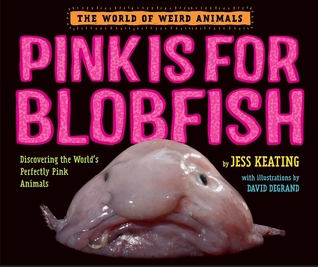
Pink is for Blobfish: Discovering the World's Perfectly Pink Animals (World of Weird Animals) by Jess Keating; Illustrations by David DeGrand (Alfred A. Knopf Books for Young Readers, February 2016) - This may have been my favorite nonfiction book in 2016. I loved the text, the formatting, the artistic layout. 

A Beetle is Shy by Dianna Hutts Aston; Illustrated by Sylvia Long (Chronicle Books, April 2016) - I love all of the books in this series. Beautiful lively, engaging text with gorgeous illustrations. 

Otters Love to Play by Jonathan London; Illustrated by Meilo So (Candlewick Press, March 2016) - This book is just as fun and playful as the subject of the book. 
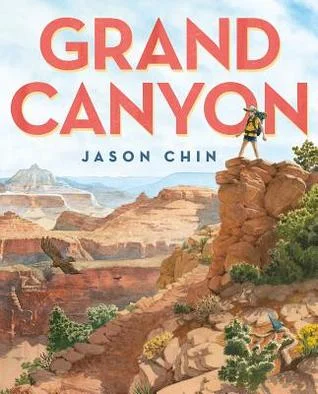
Grand Canyon by Jason Chin (Roaring Brook Press, February 2017) - Beautiful illustrations and informative text lead readers through the Grand Canyon. 

Can an Aardvark Bark? by Melissa Stewart; Illustrated by Steve Jenkins (Beach Lane Books, June 2017) - I love the question and answer format of this book. Not only is it super engaging but it also is a great mentor text for learning how to write in this style. 

Some tips for reading expository nonfiction:

  • Electronic versions of the book can be easily projected to make it easier to read and show various text features. A document camera works as well.
  • For books that include facts along with the informational text, consider reading the book over multiple days. Sharing first the text and then going back to enjoy the included facts.
  • Practice reading the text aloud before using it as a classroom read aloud. This seems obvious but with expository nonfiction it is even more important. It will help make pace and vocabulary easier and smoother. 
  • Another option is to read the book in smaller chunks. Some books like Pink is for Blobfish can be shared one animal a day before heading out to lunch or upon return from recess.  
  • Don't forget to share the author's note, and illustrator's note, and extra material at the end. This can be a great way to create further interest and assist students in learning more.

Artwork by Sarah S. Brannen ©2017

Don't forget to link up your nonfiction reviews below:
Nonfiction Picture Book Challenge: Nonfiction Read Alouds Part I

With various teachers, librarians, and bloggers posting about #classroombookaday or beginning of the year picture book read alouds, I realized that the titles were predominately fiction. As a result, I wanted to share my favorite nonfiction read alouds. I am sharing this in two parts. This week, I am sharing 5 biographical picture books. Next week, I will share 5 of my favorite science themed read alouds. In picking books, I decided to limit titles to books released in 2016 and 2017. 

Here are my picks in no particular order....

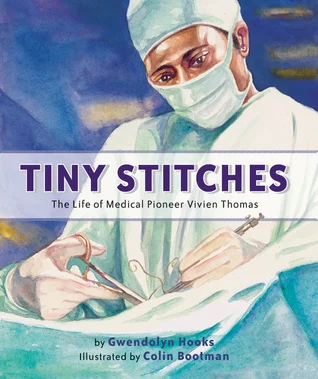
Tiny Stitches: The Life of Medical Pioneer Vivien Thomas by Gwendolyn Hooks; Illustrated by Colin Bootman (Lee & Low Books, 2016) - This story of Vivien Thomas and the work he did to create surgical tools and to be able to perform heart surgery on babies was inspiring and one that children need to learn about. 

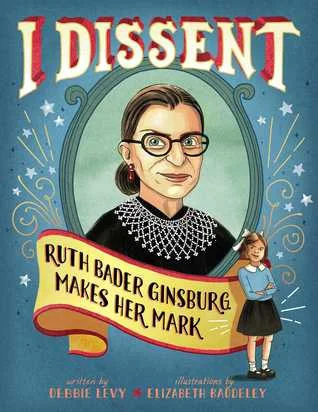
I, Dissent: Ruth Bader Ginsberg Makes Her Mark by Debbie Levy; Illustrated by Elizabeth Baddedley (Simon & Schuster, 2016) - Learning about the life work of Supreme Court Justice RBG is another example of hard work, and perseverance and so much more. 

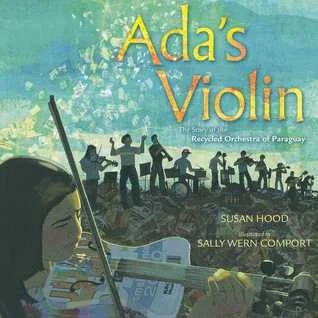
Ada's Violin: The Story of the Recycled Orchestra of Paraguay by Susan Hood; Illustrated by Sally Wern Comport (Simon & Schuster, 2016) -This story fascinated and inspired me. I struggle to play a regular instrument and in Paraguay there are students who have learned to play instruments created from recycled materials. Learning about how this program has changed the lives of students is powerful. 

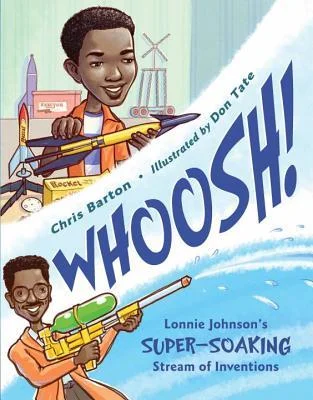
Whoosh!: Lonnie Johnson's Super-Soaking Stream of Inventions by Chris Barton; Illustrated by Don Tate (Charlesbridge, 2016) - I don't know how many children think about the inventor behind the Super-Soaking but Whoosh! provides children with a fun topic and a look again at hard work and perseverance. 

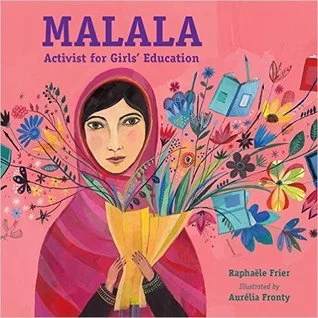
Malala: Activist for Girls' Education by Raphaële Frier; Illustrated by Aurélia Fronty (Charlesbridge, 2016) - Malala is an inspiration to me and to many others. Her story is a powerful one about standing up for what is right despite opposition. 

Look for all of these titles at your public library or independent bookstores. 

Artwork by Sarah S. Brannen ©2017

Don't forget to link up your nonfiction reviews...

Nonfiction Picture Book Challenge: What am I reading?

Recently, I have seen some Mock Sibert posts and I started to panic some. Though I have read a number of wonderful titles and some that I think have an excellent chance of winning a Sibert Award in February 2018, I am not ready to create my list yet. 

However, I wanted to pull together a post where I listed all of the "recent release" or "upcoming release" posts so if you are still looking for titles, they will be easy to look for. 

Click on the the links to take you to the corresponding post: 
January | February | March | April | ALA Edition

Checking out the posts of other teachers, librarians and authors who link up each week will also introduce you to new titles. 

For this week, I am sharing four 2017 titles that I missed in my release posts and wanted to get onto your radars. 

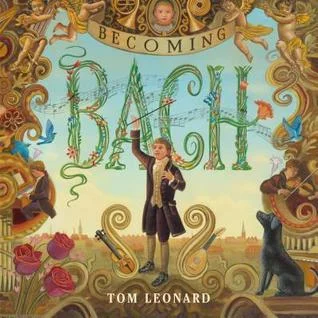
Becoming Bach by Tom Leonard (Roaring Brook Press, February 2017) - The illustrations in this book are beautiful. Though a bit simplistic, it is a nice introduction to Bach for students. The book does contain additional back matter at the end of the book. 

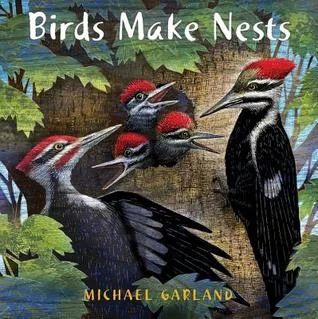
Birds Make Nests by Michael Garland (Holiday House, January 2017) - I was surprised by this one in a good way. In addition to beautiful illustrations, I learned quite a bit about the various nests that birds build. 

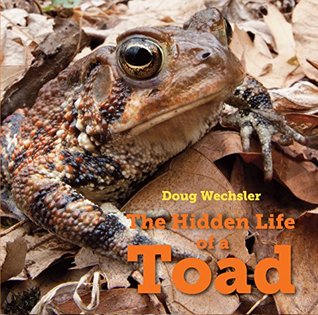
The Hidden Life of a Toad by Doug Wechsler (Charlesbridge, March 2017) - There are a number of toad and frog books that I like, but this is definitely a new favorite. Photographs and labels provide readers with strong visuals to accompany the text. The endnotes and facts provide readers with additional information. 

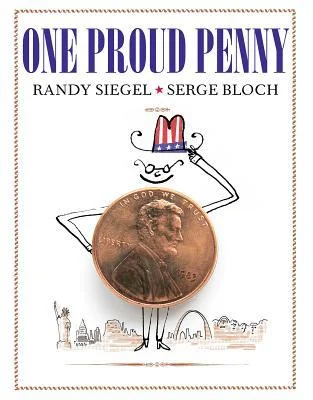
One Proud Penny by Randy Siegel; Illustrated by Serge Bloch (Roaring Brook Press, January 2017) - Narrated by the 1983 penny, readers learn about the history of the penny, as well as, the life of the penny. 

If you haven't had a chance to read these, check them out of your community library or look for them at you local indie bookstore. 

Next week, I plan on sharing some of my favorite nonfiction read alouds for the start of the school year. I have been seeing a number of posts about read alouds for the beginning of the school year and wanted to include some nonfiction titles in a sea of fiction read alouds. 

Don't forget to link up your nonfiction review posts....