Nonfiction Picture Book Challenge: Professional Reading

As school begins to let out across the country, teachers begin thinking about what books they might want to read. Of course, some beach reads are a must on any summer list. And my ever growing "to be read" pile needs to be tackled. But another area that I try to focus on centers around professional texts. Below are two books on my must read list and three that I have read and recommending. 

On my list to read....

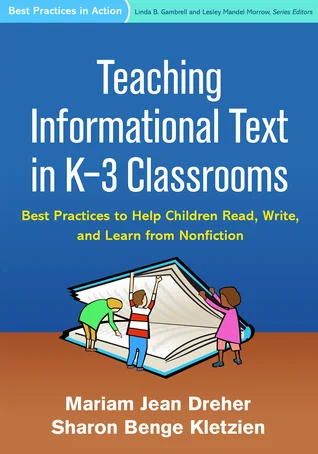
Teaching Informational Text in K-3 Classrooms: Best Practices to Help Children Read,
Write, and Learn from Nonfiction

by Mariam Jean Dreher, Sharon Benge Kletzien
The Guilford Press (September 2015)

Description from GoodReads
Specifically designed for K-3 teachers, this accessible guide describes ways to use informational text creatively and effectively in both reading and writing instruction. The book presents lessons, read-alouds, and activities that motivate students to engage with a wide variety of exemplary texts. Links to the Common Core State Standards (CCSS) are explained throughout. Key topics include how to build academic vocabulary, balance fiction and nonfiction, and address the needs of English language learners. Examples from diverse classrooms and end-of-chapter discussion questions and engagement activities enhance the book's utility as a professional development resource. Reproducible handouts and other tools can be downloaded and printed in a convenient 8 1/2" x 11" size.

Quick thoughts on this book: This book came highly recommended by author, Melissa Stewart. I immediately ordered it and have been eagerly waiting for some time to dive in and enjoy it. The book has nine chapters and covers a variety of topics including building a classroom library with a full range of informational texts, using information texts for read alouds, comprehension, vocabulary, and teaching children to write informational text, and more. 

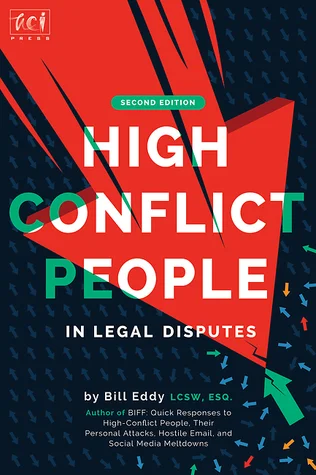
High Conflict People In Legal Disputes
by Bill Eddy
Unhooked Books (September 2016)

Description from GoodReads
People with high conflict personalities (HCPs) clog our courts as plaintiffs with inappropriate claims against their personal "targets of blame," and as defendants who have harmed others and need to be stopped. Everybody knows someone with a High Conflict Personality. "How can he be so unreasonable?" "Why does she keep fighting? Can't she see how destructive she is?" "Can you believe they're going to court over ______?"

Some HCPs are more difficult than others, but they tend to share a similar preoccupation with blame that drives them into one dispute after another—and keeps everyone perplexed about how to deal with them.

Using case examples and an analysis of the general litigation and negotiation behaviors of HCPs, this book helps make sense of the fears that drive people to file lawsuits and complaints. It provides insight for containing their behavior while managing and/or resolving their disputes. Characteristics of the five "high-conflict" personality disorders are explored:

Borderline   Narcissistic   Histrionic   Paranoid   Antisocial

Quick thoughts on this book: I was having a conversation with a colleague recently and she highly recommended this book. (Are you noticing a trend here?) I think the past several months (say since the election) I have been trying to figure out how to navigate conversations that are difficult. I will report back on this one. I am also interested in reading Eddy's BIFF: Quick Responses to High-Conflict People, Their Personal Attacks, Hostile Email and Social Media Meltdowns.

The following books I read over the past year and if you have not read them, they are worth picking up. 

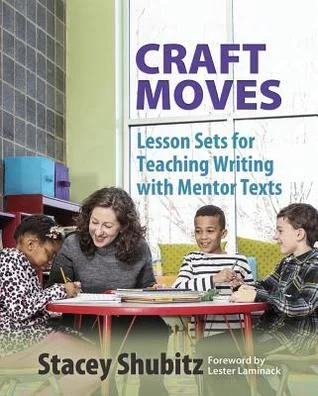
Craft Moves: Lesson Sets for Teaching Writing with Mentor Texts
by Stacey Shubitz
Stenhouse Publishing (June 2016)

Description from GoodReads
In Craft Moves, Stacey Shubitz, cofounder of the Two Writing Teachers website, does the heavy lifting for you: using twenty recently published picture books, she creates more than 180 lessons to teach various craft moves that will help your students become better writers.

Stacey first discusses picture books as teaching tools and offers ways to integrate them into your curriculum, and classroom discussions. She also shares routines and classroom procedures to help students focus on their writing during the independent writing portion of writing workshop and helps teachers prepare for small-group instruction.

Each of the 184 lessons in the book includes a publisher’s summary, a rationale or explanation of the craft move demonstrated in the book, and a procedure that takes teachers and students back into the mentor text to deepen their understanding of the selected craft move. A step-by-step guide demonstrates how to analyze a picture book for multiple craft moves.

Using picture books as mentor texts will help your students not only read as writers and write with joy but also become writers who can effectively communicate meaning, structure their writing, write with detail, and give their writing their own unique voice.

Quick thoughts on this book
This is the book that I wish I had thought to write. I love picture books. I love mentor texts. And using picture books as mentor texts is a powerful tool. Shubitz provides readers with very practical suggestions for using picture books as mentor texts. 

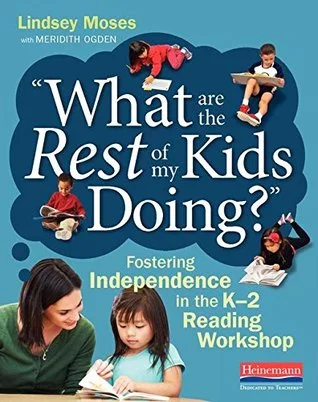
What are the Rest of My Kids Doing?: Fostering Independence
in the K-2 Reading Workshop

by Lindsey Moses, Meridith Ogden
Heinemann Publishers (March 2017)

Description from GoodReads
In her work with teachers around the country, Lindsey Moses hears this common frustration among those who work with our youngest readers: "During reading workshop, what kinds of meaningful work can students be doing independently, while I confer one-on-one or with small groups?" Lindsey and First grade teacher Meridith Ogden help you move beyond assigning busy work to providing purposeful learning experiences that build independence over the year. Their how-to suggestions including lesson plans, assessment tools, student samples, and classroom vignettes show how a traditional workshop approach can be easily adapted to meet the needs of our very young readers. 

Take the anxiety out of reading workshop with Lindsey and Meridith's research-based, proven strategies for scaffolding independence for K-2 students. 

Quick thoughts on this book: I met Lindsey Moses at a training back in February. I loved her presentation style and how she fully engaged the audience. She was practical and I felt what she was sharing was something teachers could immediately put into practice. In What Are the Rest of My Kids Doing?, Moses and Ogden provide teachers that are new to reading workshop with some great tips and suggestions to use on a daily basis.  

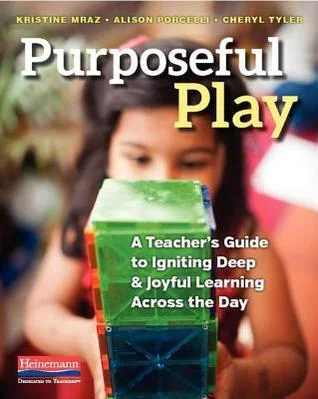
Purposeful Play: A Teacher's Guide to Igniting Deep and Joyful Learning Across the Day
by Kristine Mraz, Alison Porcelli, Cheryl Tyler
Heinemann Publishers (April 2016)

Description from GoodReads
Play is serious business.
Whether it's reenacting a favorite book (comprehension and close reading), negotiating the rules for a game (speaking and listening), or collaborating over building blocks (college and career readiness and STEM), Kristi Mraz, Alison Porcelli, and Cheryl Tyler see every day how play helps students reach standards and goals in ways that in-their-seat instruction alone can't do. And not just during playtimes. "We believe there is play in work and work in play," they write. "It helps to have practical ways to carry that mindset into all aspects of the curriculum." In Purposeful Play, they share ways to:

optimize and balance different types of play to deepen regular classroom learning teach into play to foster social-emotional skills and a growth mindset bring the impact of play into all your lessons across the day. "We believe that play is one type of environment where children can be rigorous in their learning," Kristi, Alison, and Cheryl write. So they provide a host of lessons, suggestions for classroom setups, helpful tools and charts, curriculum connections, teaching points, and teaching language to help you foster mature play that makes every moment in your classroom instructional.

Play doesn't only happen when work is over. Children show us time and time again that play is the way they work. In Purposeful Play, you'll find research-driven methods for making play an engine for rigorous learning in your classroom.

Quick thoughts on this book:
Two years ago, I had an opportunity to visit the school that Kristine Mraz works at and to observe her and her students in action. I loved that the school had made a significant investment in play and building blocks. When I saw, Purposeful Play, I knew I had to read it. Too often we forget that play is a critical component in the process of learning and discovery. Looking for away to take play to the next level, pick up a copy of Purposeful Play

So, what professional text are on your summer reading list? Or what would you recommend to others?

Artwork by Sarah S. Brannen @2017

Don't forget to link up your nonfiction reviews....

Nonfiction Picture Book Challenge: Follow Up to Nonfiction Page Requirements

Last week, I shared my personal thoughts on teachers assigning nonfiction books of a particular length for book reports. You can read it here. Often times those arbitrary page numbers do not take into consideration the actual length of children's nonfiction books and the difference in reading nonfiction compared to fiction. So, if you are facing a teacher who is still assigning nonfiction texts of 150 pages to 3rd graders, share out the suggestions in this post for 3rd to 5th graders.

Picture Books:
Don't underestimate the power of a picture book. Picture book biographies can introduce students to different individuals or help children pique their curiosity to learn more about someone.

Teachers can also have children compare and contrast several books on the same individual in order to see how the author develops an aspect of the person's life or what each author highlights. 

National Geographic & Simon Spotlight Readers:
Nonfiction early readers from Simon Spotlight and National Geographic Kids are some of my favorites. Though there may only be 48 pages, many are written at a third grade level of higher. 

Graphic Novels:
Don't ignore the great nonfiction being published in a graphic novel format. I have particularly enjoyed the nonfiction graphic novels coming from First Second/Macmillan. The new Science Comics series has about six books out and more are expected. 

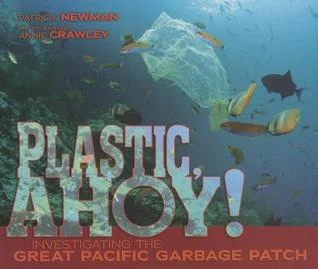
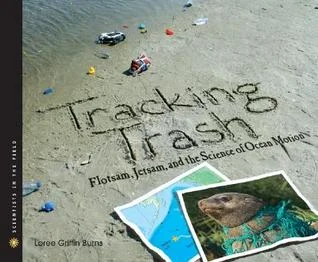
Another option with slightly longer nonfiction picture books is to pair two books on similar topics. This provides readers with more than one source of information and perspective on a topic. For example, I blogged about marine pollution here using the titles below. You can also bring in videos and other resources to help children learn more about a topic. 

Other thoughts about books:
In 2014, I did a series on Building a Nonfiction Classroom Library with a focus on picture books that would work for a variety of reading levels. Here are the links to the five posts with more than a 100+ titles:
Building a Classroom Library | Animals | Biographies | Creepy Crawlies | Marine Life

And finally, check out this post each week and the bloggers who link up to discover dozens of new titles every week. 

Artwork by Sarah S. Brannen @2017

Don't forget to link up your nonfiction reviews...
Nonfiction Picture Book Challenge: A Personal Vent About Nonfiction and Page Requirements

For those of you who know me well, in real life, you have probably experienced one or two of my rants about any number of topics. However, on this blog, I typically refrain from a long winded rant about anything. Yet, there is one topic that will get my blood pressure to rise. The dreaded nonfiction book report. 

A friend posted on Facebook
Last report of the year, non fiction oral book report- must be at least 150 pages. We like these 3 options but before we settle, any Middle Grade Non-Fiction recommendations out there?

My first reaction was...what grade are we talking about? Any particular topics? Are we talking about an 8 year old or a 12 year old? But what really jumps out is the page requirement.

And then the rant starts building within and spews forth. 

Let's talk adult nonfiction for a moment....

Language at the Speed of Sight by Mark Seidenberg (Basic Civitas Books, 2017) -
Total number of pages 384.
Print: tiny
Whitespace: very little

Reading this book, despite my already having a decent grasp on how people learn to read, is slow and laborious. I might not finish it. Maybe I will pick and choose chapters. It might take me weeks to work through this one. 

Now let's talk about adult fiction....

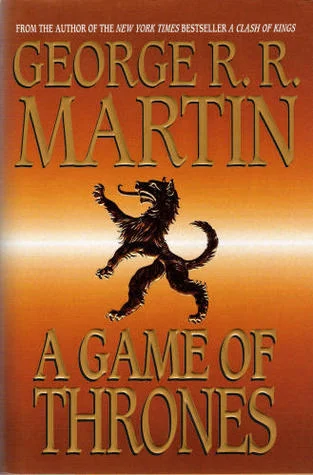
A Game of Thrones ( A Song of Fire & Ice, Book 1) by George R.R. Martin (Bantam, 2005)
Total number of pages 835
Print: small
Whitespace: little

On the other hand, an 800+ page fantasy adventure may be devoured in a few days. Double the number of pages as the nonfiction title but much easier to sit and read. 

Which of these could I probably get busy teachers to read over the summer? Though there might be some who would dive in and stick with The Language at the Speed of Sight, I would have better luck getting them to read the fictional title (or a fictional title).

The reality...if I asked a group of teachers to read something for professional development, I would have more luck with something like the book below.

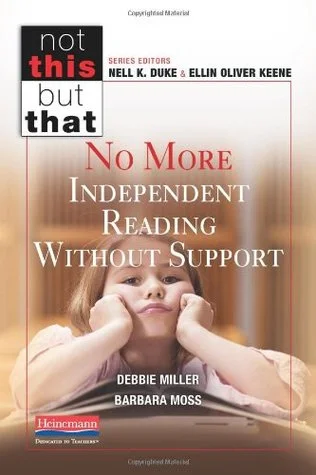
No More Independent Reading Without Support by Debbie Miller & Barbara Moss (Heinemann 2013)
Total number of pages 87
Print: comfortable
Whitespace: Fair amount

This is a more comfortable and practical read and takes about 90 minutes. Yet it is the tenth of the length of the fictional novel. 

So, if as adults, much of our nonfiction that we consume is sometimes a half to three-quarters shorter than the fiction we read, why do we expect that children should read nonfiction with the equivalent pages of a fictional story? 

Let's go back to my friend's post. Turns out that the teacher was expecting third graders to read a nonfiction book that is 150 pages long. And this is where I start to sputter and go all crazy. 

Let's take a look at a children's nonfiction title:

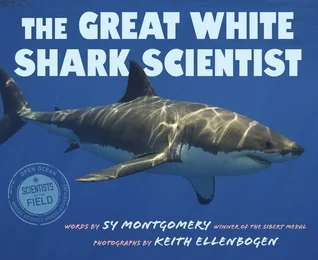
The Great White Shark Scientist by Sy Montgomery; Photographs by Keith Ellenbogen (HMH Books for Young Readers, 2016) 
Total Number of pages 80
Print: comfortable
Features: Variety of nonfiction text features, including photographs

Technically by the teacher's standard, the student would not be able to read this book for his or her report. Yet, the reading level of this book is really more for 5th graders and up. And the interest level for sharks would be high. 

Here are a few other titles...

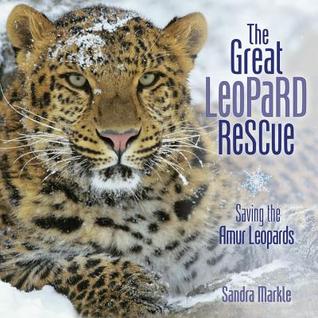
The Great Leopard Rescue: Saving the Amur Leopard by Sandra Markle (Millbrook Press, 2016)
Total number of pages: 48
Print: comfortable
Features: A Variety of nonfiction text features, including photographs

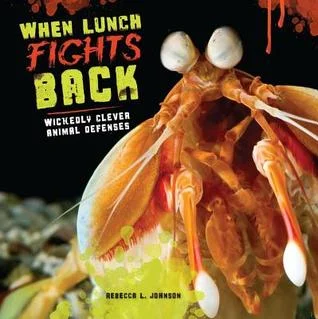
When Lunch Fights Back: Wickedly Clever Animal Defenses by Rebecca L. Johnson (Millbrook Press, 2014) 
Total number of pages: 48
Print: comfortable
Features: Variety of text features, including photographs

Even reading both of these book, which would be a challenge for some third graders, would not come close to the amount of pages that the teacher is requesting for her report. However, either of these books would be challenging, engaging and informative reads for a third or fourth grader.

From a publisher's perspective, books are printed in standard offset printing with page lengths in multiples of 8. So a picture book is typically 32 pages. Many of the current day, quality nonfiction for children 3rd to 7th grade fall within the 48 to 96 pages.  Much of the longer nonfiction that is 150-250 pages long are often not the right content matter or style for an 8 or 9 year old, even for those that are a bit more advanced as readers or who posses a better stamina. 

When a teacher makes a requirement like the 150 pages, s/he is greatly eliminating appropriate choices for most of his/her students and possibly creating a frustrating situation for the students. 

I have come to realize that teachers at schools where there are no librarians and little exposure to new nonfiction titles are unaware of the books that are out there and also unaware of how publishers format books for children. We need to continue to spread the word about the titles that we are sharing as part of this challenge. Stop by next week and check out Part II of this post, where I identify some of my favorite titles for 3rd and 4th graders that you can share with teachers. 

Artwork by Sarah J. Brannen @2017

Don't forget to link up your nonfiction reviews