Nonfiction Picture Book Wednesday: Coyote Moon Blog Tour

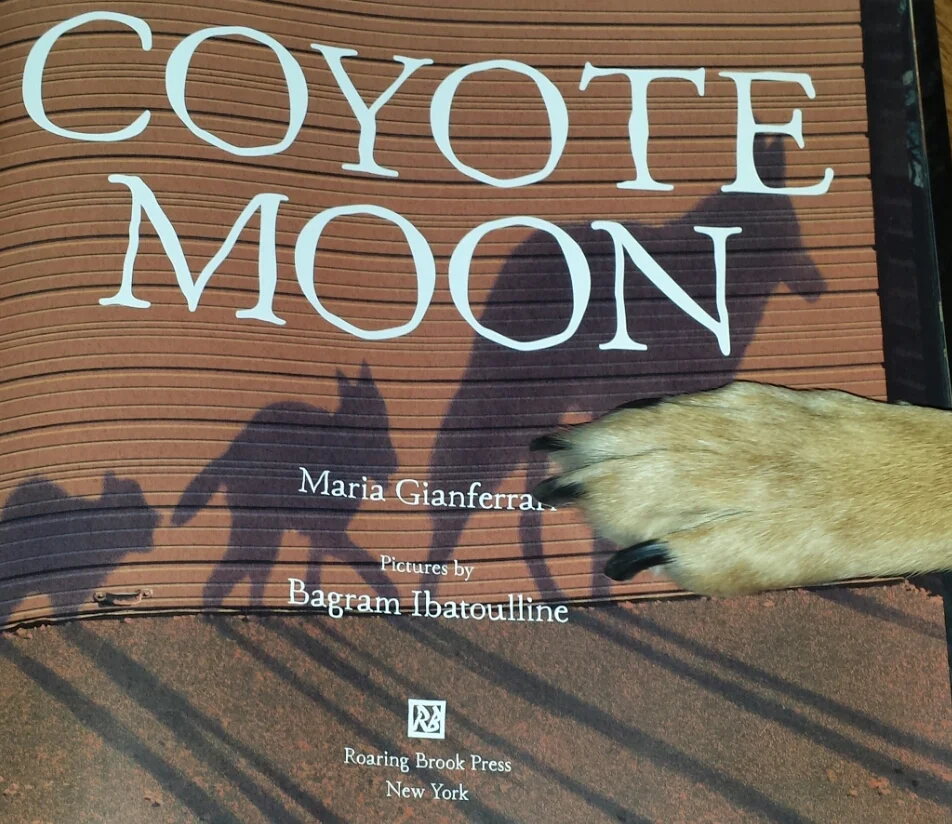
Thank you Maria Gianferrari for stopping by today and sharing about your new book, COYOTE MOON, with some cool facts and resources about coyotes. 

CELEBRATING THE RELEASE OF COYOTE MOON WITH
TOP TEN COOL THINGS ABOUT COYOTES

1.    EASTERN COYOTES VS. WESTERN COYOTES:
Eastern coyotes are also known as “coywolves,” due to their hybrid heritage. European settlement in eastern North America decimated the wolf population through hunting, deforestation and poisoning. Western coyotes moved into former wolf territory, and wolves viewed them as mates rather than competition for resources.

Coywolves are larger than western coyotes. They have longer legs, bigger paws, larger skulls, shorter snouts, smaller ears and bushier tails.

Here’s a short video that shows their physical differences: 
You can find more information on coywolves on Dr. Jonathan Way’s Eastern Coyote/Coywolf Research website.

2.     RANGE:
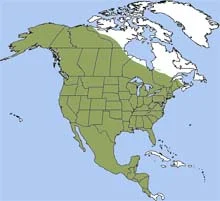
Coyotes live in every US state except Hawaii. Their range extends throughout North America as far north as Alaska, and as far south as Panama, and coast to coast in the continental US. 

Click on image to see original site. 

3.    GOTHAM COYOTES!:
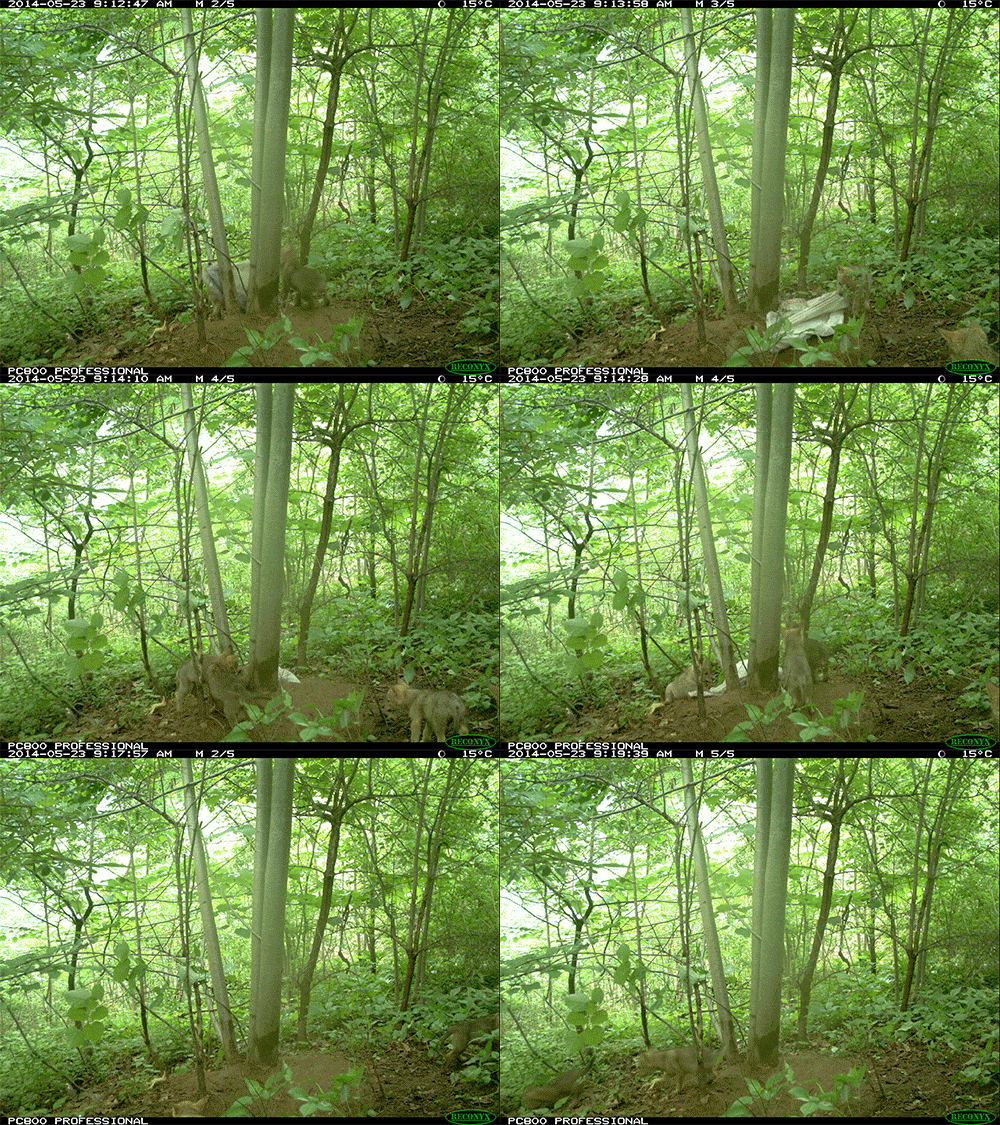
You read that right—coyotes have adapted to urban living are thriving in New York City! Scientists involved in the Gotham Project study these city dwellers.

Here’s an image of a mother and her pups:

For more images and videos, visit Gotham Coyote’s Gallery

Coyotes live in most of our cities. Check out 10 Fascinating Facts about Urban Coyotes

4.    ADAPTABILITY:
One of the main reasons coyotes can easily be our neighbors is due to their adaptability, especially when it comes to their diet. They are opportunistic, which means they eat what’s available and most plentiful in their environment. Desert denizens eat lizards, snakes and prickly pear. City supper might be rats or mice or squirrels. In the country or residential areas, it might be voles, rabbits, turkeys or even feral cats. Coyotes also eat watermelons, berries, other fallen fruit, and insects like grasshoppers or grubs. They will even scavenge and eat carrion.

5.    ECOSYSTEM BALANCE:
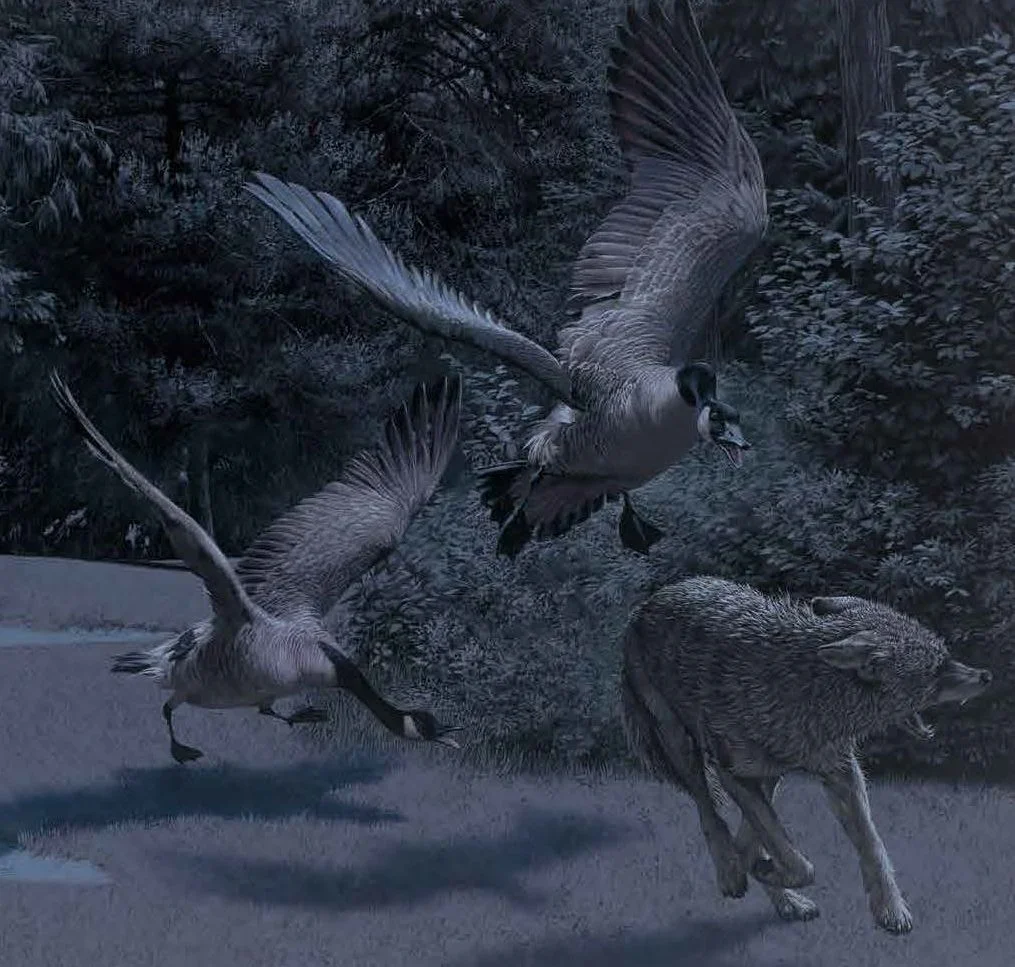
Predators such as coyotes help maintain balance in an ecosystem by controlling the populations of rodents, rabbits, and even Canada Geese by eating their eggs. They also help the songbird population by keeping feral cat colonies in check.  [image #4 from CM]

Visit Project Coyote to learn more about the role in maintaining ecosystem balance.

Though it’s not directly about coyotes, Dorothy Hinshaw Patent’s When the Wolves Returned: Restoring Nature’s Balance in Yellowstone is a wonderful study of a canine predator’s role in an ecosystem.

6.    HELPERS:
When coyote mates have a new litter of pups, some juveniles from the previous year’s litter may not choose to disperse and find their own home territory. Instead, they stay on to help raise the new pups.

7.    OLYMPIC ATHLETES:
Coyotes are agile and very athletic: 

·      Long jump: up to 12 feet!

·      High jump: over 6 feet!

·      Sprint:  up to 40 miles per hour!!

8.    CANIS LATRANS:
That’s the coyote’s Latin name, and it means “barking dog,” an appropriate name for a canid that uses all kinds of sounds to communicate. They’re also known as North America’s “song dog.”

For an extensive list of their vocalizations, have a look at “Translating the Song Dog”  

9.    COYOTE CULLING:
Coyote populations self-regulate by availability of food and habitat. Killing coyotes disrupts the group hierarchy resulting in an increase in coyotes reproducing as well as larger litter sizes due to decreased competition for food.

10. CO-EXISTENCE:
Coyotes are here to stay, so let’s keep them wild! Most human-coyote conflicts stem from feeding coyotes, either overtly or inadvertently.

Here are some basic steps you can take to discourage them from being bold:

·      Keep pet food inside.

·      Keep birdseed off the ground since it attracts rodents, and rodents attract coyotes.

·      Clean-up fallen fruit.

·      Keep compost in secure containers.

·      Close off crawl spaces under decks to prevent denning.

·      Keep cats inside.

·      Don’t leave your dog unattended in your yard.

If a coyote seems habituated, and is frequenting your yard, practice hazing techniques to re-instill fear:

·      Stand tall, yell and wave your arms.

·      Make loud noises with pots, pans or noisemakers.

Want to learn even more about coyotes? Here are some books and websites:

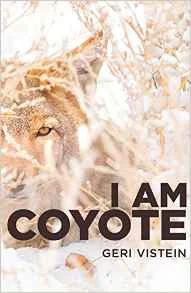
·      I Am Coyote by Geri Vistein and her website: Coyote Lives in Maine

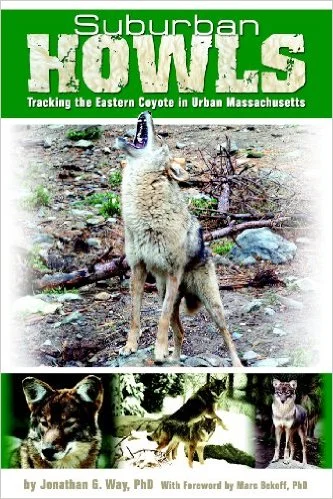
·      Suburban Howls: Tracking the Eastern Coyote in Urban Massachusetts by Jonathan G. Way and his website: Eastern Coyote/Coywolf Research

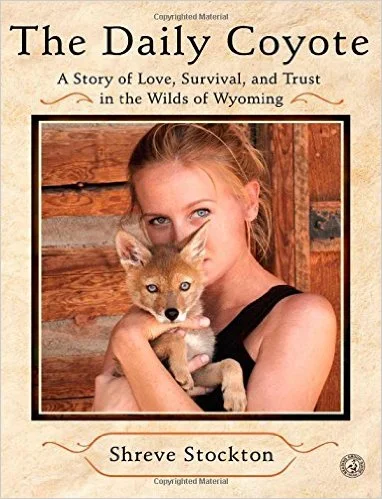
·      The Daily Coyote by Shreve Stockton and the Daily Coyote website

·      Gotham Coyote

·      Urban Coyote Research

·      Project Coyote

·      The Natural History of the Urban Coyote

·      Coyote: Seeking the Hunter in Our Midst by Catherine Reid

·      God’s Dog: A Celebration of the North American Coyote by Hope Ryden

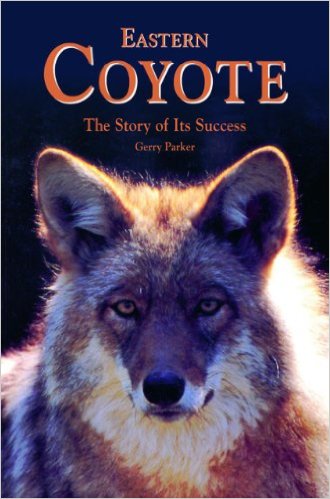
·      Eastern Coyote: The Story of Its Success by Gerry Parker

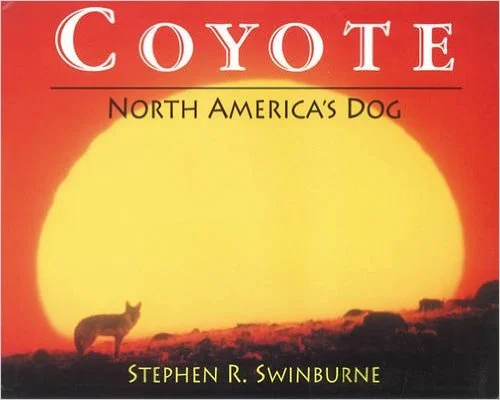
·      Coyote: North America’s Dog by Stephen R. Swinburne

A new release that I haven’t yet read, but sounds fantastic:

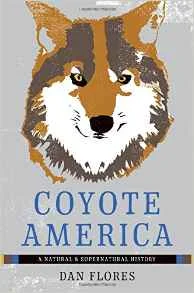
·      Coyote America: A Natural and Supernatural History by Dan Flores

About the author: Maria Gianferrari was inspired to write Coyote Moon after her first coywolf sighting on a moonlit night in her own Massachusetts backyard. Maria now lives in Northern Virginia with her scientist husband, artist daughter, and rescue dog, Becca. Coyote Moon has received starred reviews from Kirkus, School Library Journal and Publisher’s Weekly and is a Junior Library Guild selection. This is Maria’s first book for Roaring Brook Press. To learn more about Maria please visit her at mariagianferrari.com, on Facebook or Instagram.

Check out the other stops on the Blog Tour

FRI 7/15:                   Pragmatic Mom (+ 3 book giveaway)

MON 7/18:                 Nonfiction Detectives

TUES 7/19:                Debtastic Reads

WED 7/20:                 Kid Lit Frenzy

THURS 7/21:              Librarian’s Quest

FRI 7/22:                   Kidlit411

MON 7/25:                 The Reading Zone

TUES 7/26:                Bartography

WED 7/27:                 Unleashing Readers

Enter the rafflecopter to win a copy of Coyote Moon. Winner must be 13 years old or older and have a US mailing address: 

Don't forget to link up your nonfiction reviews

Nonfiction Picture Book Wednesday: The ALA Edition

ALA Annual Conference is one of my favorite events. It's a fabulous opportunity to meet up with friends, authors, illustrators, and publishers and celebrate books.  I always say I will take more pictures and I still miss getting all of the pictures that I would like, especially pictures of the fabulous authors and illustrators that I got to spend time with. So, where I don't have a picture from the wild, I did add the cover image. The books are sorted by publisher but not in any particular order and this is not an exhaustive list. My goal was just to get you excited about some of the exciting titles coming out this summer and fall.

Boyds Mills Press

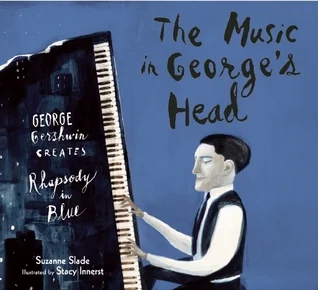
The Music in George's Head: George Gershwin Creates Rhapsody in Blue by Suzanne Slade; Illustrated by Stacy Innerst (September 2016)

Blood Brother: Jonathan Daniels and His Sacrifice for Civil Rights by Rich Wallace and Sandra Neil Wallace (September 2016) 

Charlesbridge

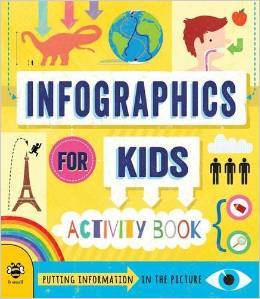
Looking for a book to help support visual fluency, then you might want to track this book down in August 2016. 

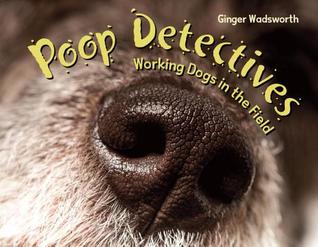
I found myself reading the F&G (advanced copy) of POOP DETECTIVES: WORKING DOGS IN THE FIELD one evening of ALA despite how tired I was. I was just fascinated by these service dogs. Look out for this book in October 2016.

HMH Books for Young Readers

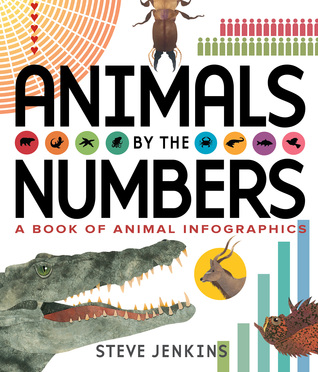
I have no idea how Jenkins can release as many books per year as he does, but his second title with HMH for 2016 comes out November 2016.

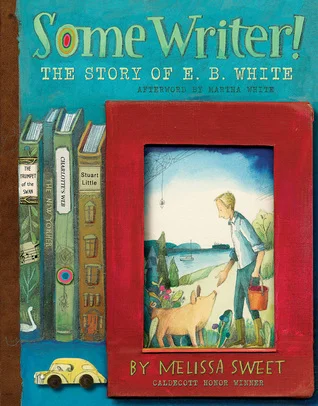
If you don't have SOME WRITER! on your list to read this fall, you must add it.  I have read it once but want to go back to read and savor it. Some of Sweet's finest work. Comes out October 2016.

Holiday House

This picture book introduces young children to the concept of how we get our food. 

Lerner/Millbrook Press

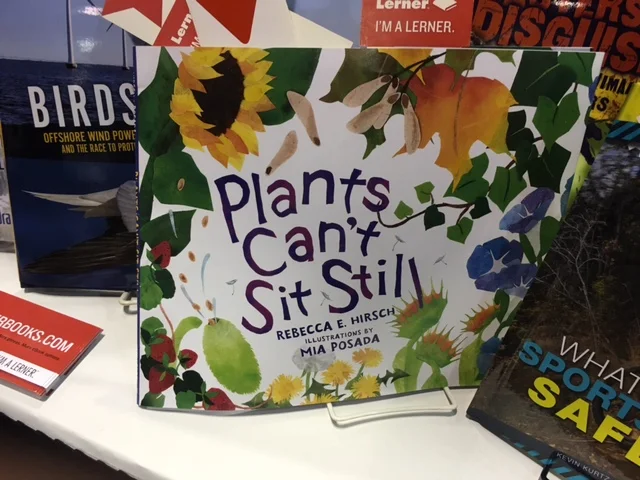
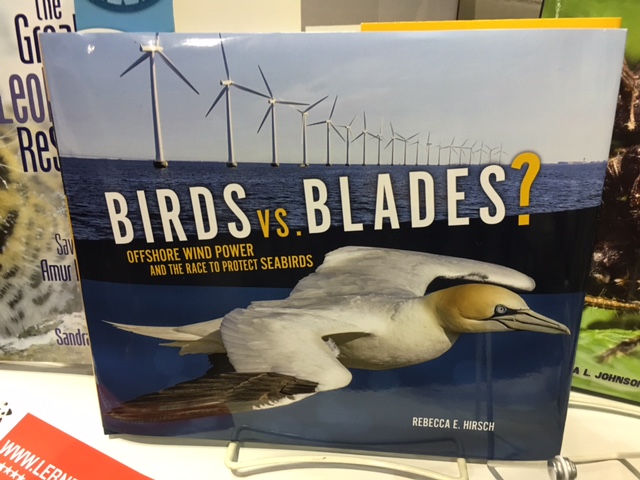
Rebecca E. Hirsch has two books out this fall. PLANTS CAN'T SIT STILL reminds me of Lois Ehlert's work but it will pair nicely with PLANTING THE WILD GARDEN and books about seed dispersal.

Kirsch's other book looks at how wind power and birds can co-exist without impacting the environment in negative ways.

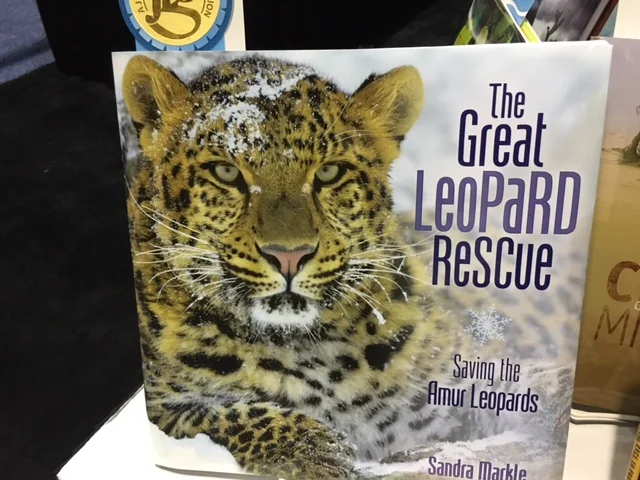
Sandra Markle has a new book coming out in August 2016. I can't believe that I had a fabulous opportunity to spend the evening with Sandra over dinner and never got a picture of the two of us. I was fascinated by Sandra's adventurous spirit but her understanding of how to communicate her books with teachers blew me away. I was so thankful for the time we spent together. I also loved that Sandra created a special blog post about Little and Littler Monkey, when I asked about a nonfiction book to pair with Quick, Little Monkey! by Sarah L. Thompson (Boyds Mills Press, 2016). 

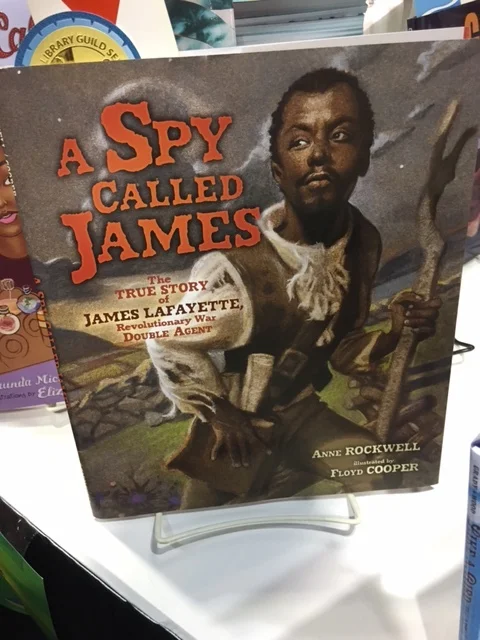
Anne Rockwell and Floyd Cooper have created a picture book biography on James Lafayette. An incredible story out in November.

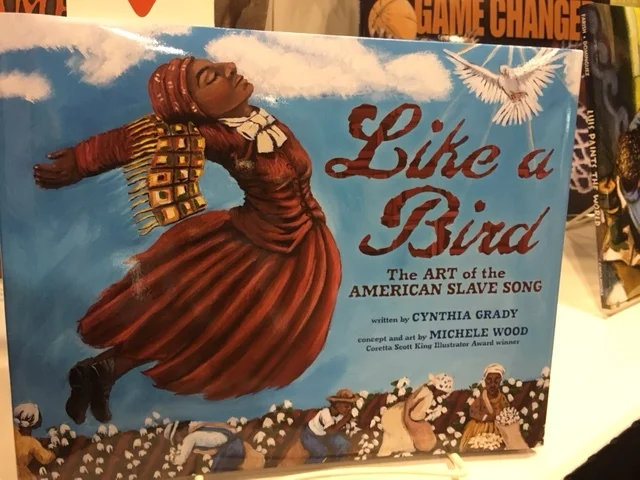
Though I didn't get to read this one, I did get to flip through the pages and it is beautiful. Can't wait to get my hands on it this fall.

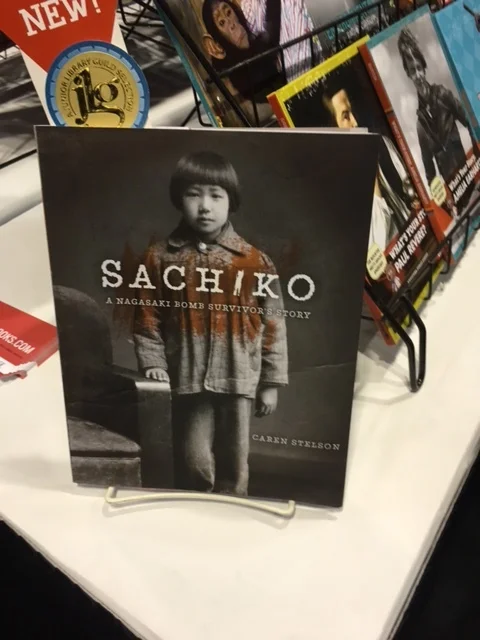
Sachiko: A Nagasaki Bomb Survivor's Story by Caren Stelson (Carolrhoda Books, October 2016) 

Macmillan Children's Publishing

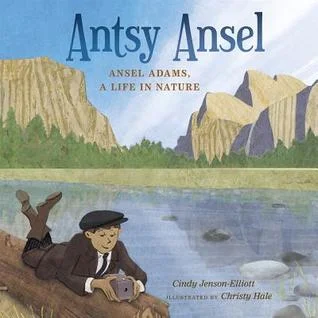
Antsy Ansel: Ansel Adams A Life in Nature by Cindy Jenson-Elliott; Illustrated by Christy Holt (September 2016)

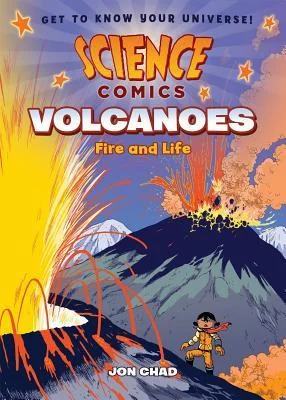
Science Comics: Volcanoes Fire and Life by Jon Chad (October 2016)

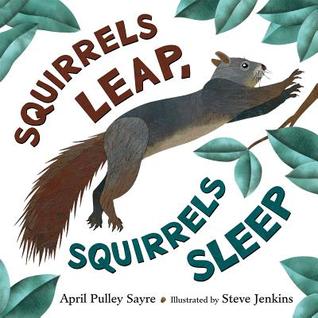
Squirrels Leap, Squirrels Sleep by April Pulley Sayre; Illustrated by Steve Jenkins (November 2016)

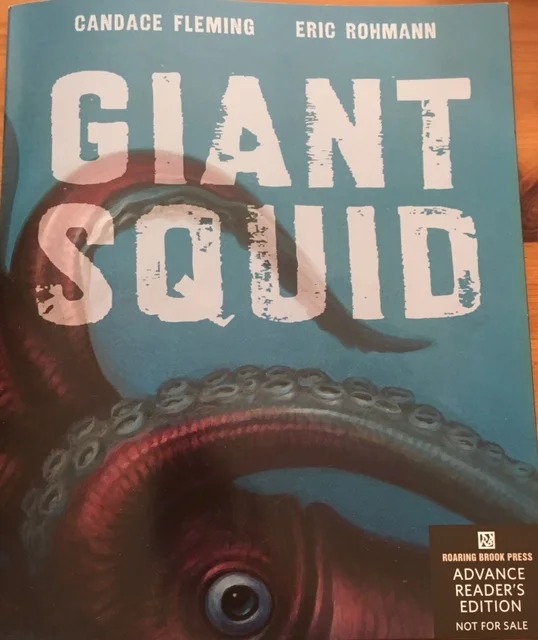
Giant Squid by Candace Fleming; Illustrated by Eric Rohmann (September 2016) - This book pairs beautiful verse with gorgeous illustrations. 

Simon and Schuster

I managed to snap a picture of this one but not get a chance to read it. Can't wait to get my hands on it. 

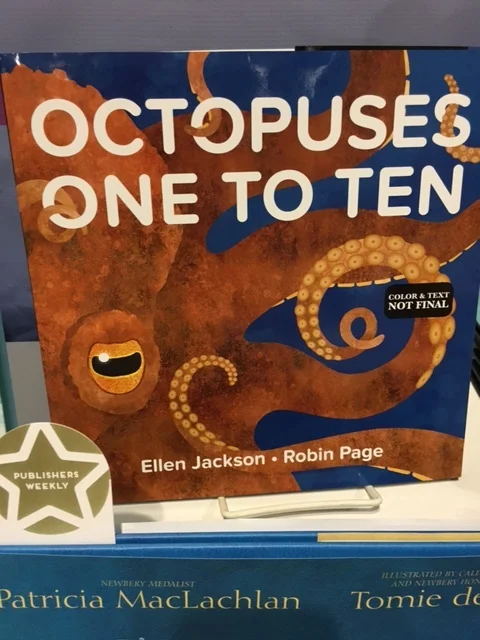
Another one that I want to read just because Robin Page illustrated it. 

And for the final title...a picture book biography on Stephen Bishop

Don't forget to link up your nonfiction reviews: