Nonfiction Picture Book Wednesday: Hillary Rodham Clinton

For March, in celebration of Women's History Month, I am featuring books about strong women who have made a significant impact in their field.  I have been holding off on reviewing these two biographies since I received them in January because I was waiting for the right time.  Both books feature an overview of the life and work of Hillary Rodham Clinton. One a picture book biography that is a beautiful introduction to Hillary Clinton and the other is a long-form biography written for for students in 5th grade and up. 

I will freely admit that I admire Hillary and appreciated each of these books for how they introduce readers to this amazing woman. However, I do recognize that some readers may want books that are more "objective". If you are looking for books that point out or focus more on Hillary's flaws, then you don't need a book. All you need is to look no further than the news.  So many are eager to try and discredit Hillary.

From the time, Hillary became First Lady, I remember being shocked and amazed at how she was criticized for things that men would never have been criticized for. As if the bar for women was set much higher than it has ever been set for men.  And, well frankly it has been set higher.

Enough of my rambling, let's talk books.  
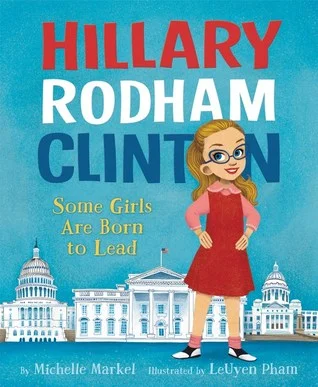
Hillary Rodham Clinton: Some Girls Are Born to Lead
by Michelle Markel; Illustrated by LeUyen Pham
Balzer & Bray (January 5, 2016)
Audience: Kinder to 3rd
Nonfiction * Biography * Politics * Women's History
Indiebound | WorldCat

About the book:
In the spirit of Barack Obama: Son of Promise, Child of Hope and Amelia and Eleanor Go for a Ride comes an inspiring portrait of Hillary Rodham Clinton: a girl who fought to make a difference—and paved the way for women everywhere—from Michelle Markel and LeUyen Pham.

In the 1950s, it was a man’s world. Girls weren’t supposed to act smart, tough, or ambitious. Even though, deep inside, they may have felt that way. And then along came Hillary. Brave, brilliant, and unstoppable, she was out to change the world.

They said a woman couldn’t be a mother and a lawyer. Hillary was both. They said a woman shouldn’t be too strong or too smart. Hillary was fearlessly herself.

It didn’t matter what people said—she was born to lead.

With illustrations packed full of historical figures and details, this gorgeous and informative picture book biography is perfect for every budding leader. Includes a timeline, artist’s note, and bibliography.

A few thoughts on this book:
In November, I had a chance to hear illustrator, LeUyen Pham talk about the research that she did for this picture book biography written by Michelle Markel.  I was in awe of the attention to details and effort she put into this book. 
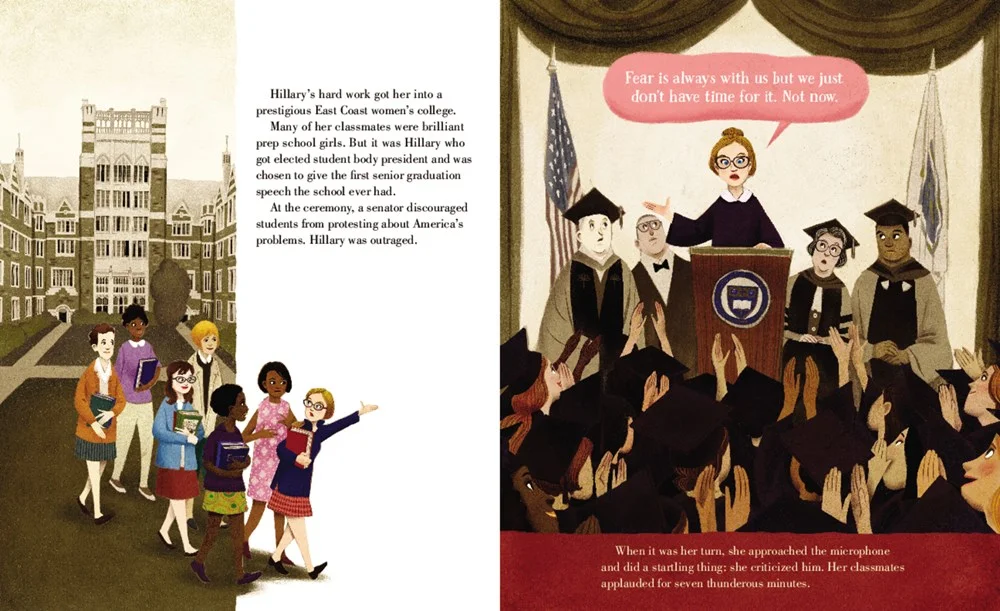
Markel provides young readers with an engaging overview and introduction to Hillary Rodham Clinton's life and work and especially Hillary as the leader she was born to be. The text flows well and though not comprehensive, it provides readers with many important events in Hillary's life.

Pham's illustrations support the text and provides another layer of richness to the book due to the incredible attention to detail. The end of the book provides readers with a timeline and an artist's note with several pages of references. 
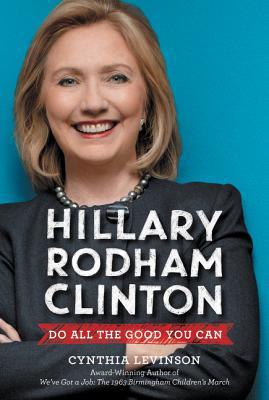

Hillary Rodham Clinton: Do All the Good You Can
by Cynthia Levinson
Balzer & Bray (January 5, 2016)
Audience: 4th to 9th grade
Nonfiction * Biography * Politics * Women's History
Indiebound | WorldCat

About the book
An inspiring and meticulously researched middle grade biography of Hillary Rodham Clinton—First Lady, senator, secretary of state, and Democratic candidate for president in 2016.

Hillary Rodham Clinton is a true leader. Growing up in Park Ridge, Illinois, Hillary was inspired by the philosophy of John Wesley, who urged his followers to "do all the good you can." Rising to prominence in 1992 as the First Lady of the United States, Hillary captured the world's attention with her bold ideas and political forcefulness.

From her time at Wellesley to her life at the White House and beyond, Hillary has been at the forefront of huge change—and despite setbacks and political scandals, she has worked for good in the world.

Acclaimed author Cynthia Levinson creates a compelling and personal portrait of Hillary's historic journey from her childhood to her service as secretary of state and beyond. Includes a timeline of Hillary Rodham Clinton's life and an eight-page photo insert.

A few thoughts on this book:
Cynthia Levinson provides readers with a glimpse of Hillary that may not always be evident in the media. The Hillary that is "warm, funny, thoughtful, and humanly flawed person of faith". As I read through this biography, I gained a better understanding for what events and experiences shaped and influenced her. How both the political and cultural changes of her teen and young adult years left such a deep impact on her and would permeate her life's work. 

Though I realize that there will be individuals who will never want to recognize Hillary Rodham Clinton for the incredibly bright and skilled woman and talented leader that she is, other readers will find Levinson's portrayal of Hillary as insightful, and may even change how they view Hillary.  

Other books on Hillary Rodham Clinton to consider:
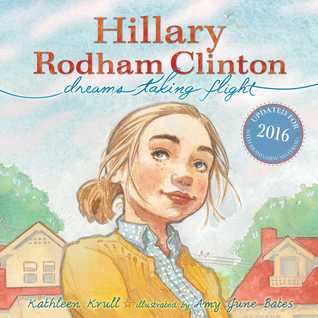
Hillary Rodham Clinton: Dreams Taking Flight by Kathleen Krull; Illustrated by Amy June Bates (Simon & Schuster, Updated in August 2015) 
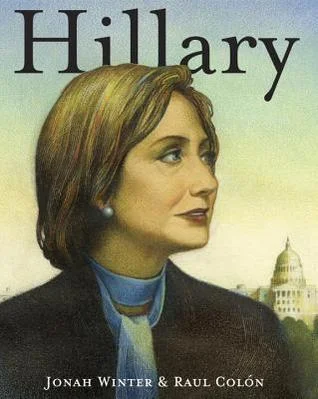
Hillary by Jonah Winter; Illustrated by Raúl Colón (Schwartz & Wade, January 2016)
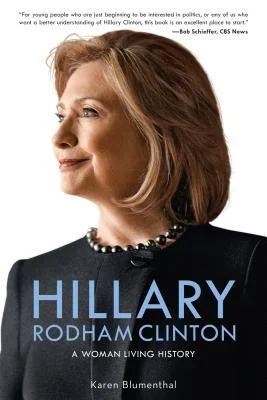
Hillary Rodham Clinton: A Woman Living History by Karen Blumenthal (Feiwel & Friends, January 2016)

Don't forget to link up your nonfiction reviews:
Nonfiction Picture Book Challenge: Pink is for Blobfish

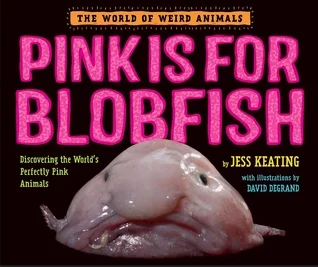
After a particularly frustrating day and once again listening to national trainers talk about informational text and nonfiction, but seemingly not have read any of the books that have come out in the last few years, I was glad to spend time reading Jess Keating's newest book, Pink is for Blobfish: Discovering the World's Perfectly Pink Animals

Pink is for Blobfish: Discovering the World's Perfectly Pink Animals
by Jess Keating; Illustrated by David DeGrand
Knopf Books for Young Readers (February 2, 2016)
Audience: Grades K-3+
Nonfiction * Science & Nature * Zoology
Indiebound | WorldCat

Description from GoodReads
Some people think pink is a pretty color. A fluffy, sparkly, princess-y color. But it's so much more.
Sure, pink is the color of princesses and bubblegum, but it's also the color of monster slugs and poisonous insects. Not to mention ultra-intelligent dolphins, naked mole rats and bizarre, bloated blobfish.

Isn't it about time to rethink pink?

Some quick thoughts about this book
Part of me would like to simply say "Pink is for Blobfish is good. Buy it. Read it." However, I probably should provide readers with a little more information. Here goes...

Check out the official book trailer:

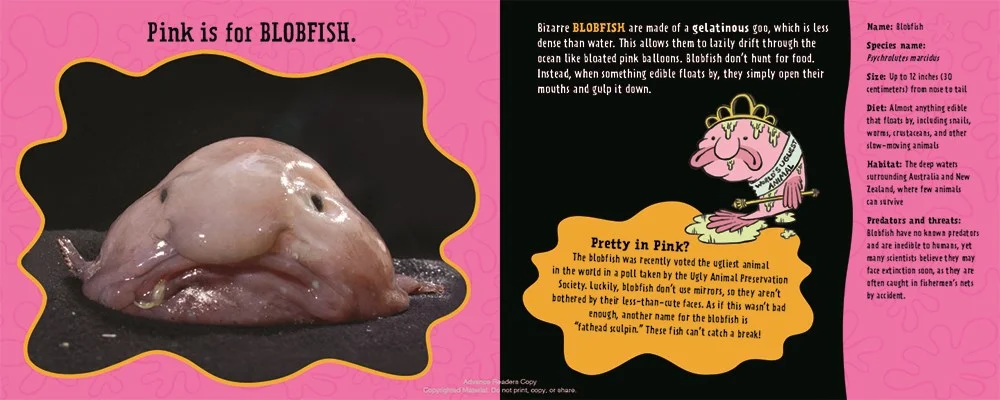
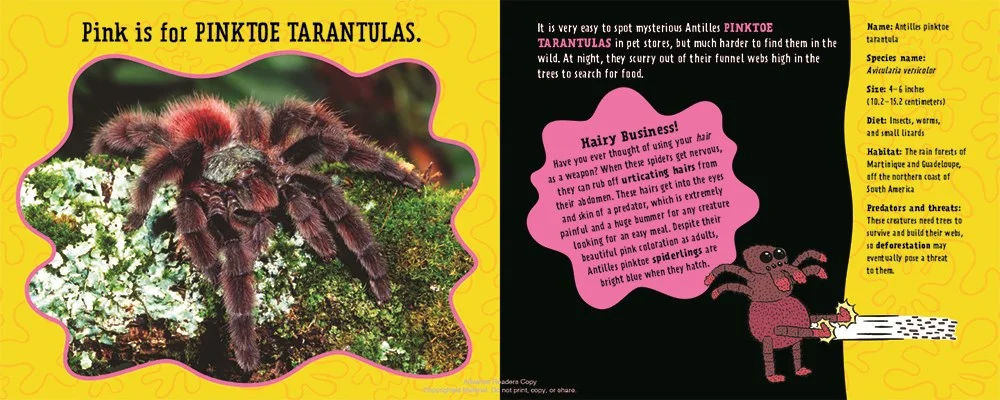
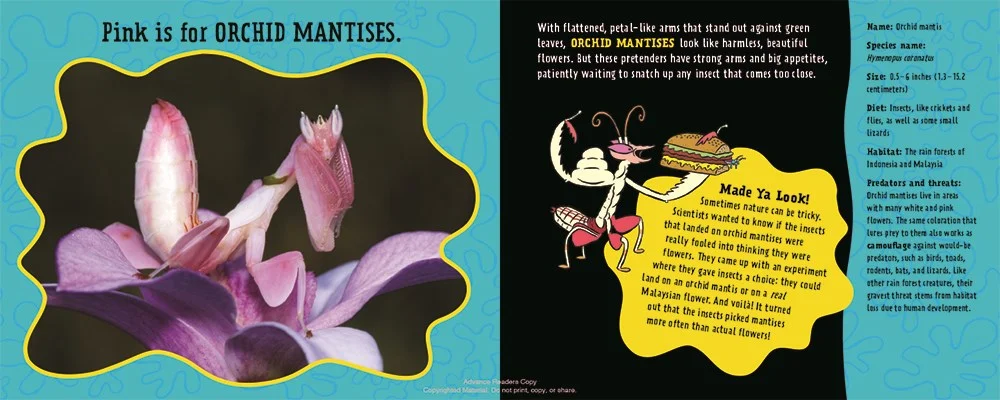
If you are one of those who have not seen this book yet, check out some of the page spreads below. 

Starting with a fish that is comprised of gelatinous goo, Keating takes readers on a look at 17 creatures that are pink in one way or another. 

The format is simple. Each page introduces a new creature, and then some simple facts and information about each animal. Facts include species name, size, diet, habitat and predators. 

One thing I love about this type of format is that a teacher can read this a little at a time. Have a few minutes before transitioning to lunch? Open up the book and read about a different animal. It also makes a fabulous mentor text for children learning about how to write informational text or nonfiction.  Information at the end includes a glossary of important words, and a few additional resources to explore new discoveries about unusual animals. 

Jess Keating and illustrator, David DeGrand have created an informative, visually engaging book for all children of all grades. Pick up a copy at your local indie bookstore or public library. 

Don't forget to link up your nonfiction reviews:
Nonfiction Picture Book Wednesday: Fiction in Children's Nonfiction

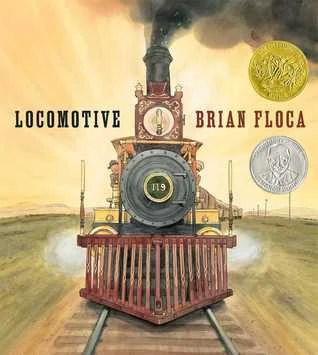
This is a very different blog post than I usually write for the Nonfiction Picture Book Challenge. However, it has been on my mind a lot recently. It started the year that Locomotive won a Sibert Honor.  If I made bets, I would have put money on it not winning a Sibert. In my mind, it was a beautifully illustrated and clearly a well researched historical fiction book, or at least that is what I thought. Then recently, I heard someone mention in a discussion around the Sibert about how much fiction is allowed for it to be considered Informational or Nonfiction? I have to admit I had a moment of shock. With my tendency to "put my foot in my mouth", I wisely kept my mouth shut and filed it away as something to ponder.

When I first started reading nonfiction picture books, I never really thought about the lines between fiction, nonfiction, and informational text. If a book had made up characters but was set in a historically accurate time period, it fell into historical fiction. But this was about as far as I went with the distinction. And I personally was very liberal with what I would classify as informational. In the beginning, I have to admit, I barely read the back matter. However, there is this funny thing about reading lots and lots of books in a particular genre, and learning to read the author and illustrator notes at the end of the books, and listening to authors and illustrators talk about their books and research and decisions they made, questions come up. Pesky questions that make you think as you read. And ultimately, those are the best kind of questions. 

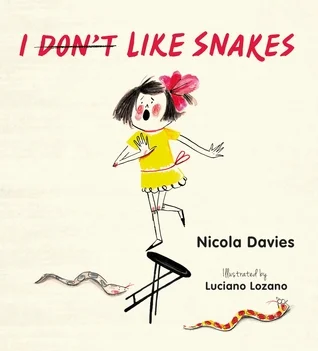
The questions that started to come up had to do with where does an author draw the line between a book being nonfiction or fiction. Clearly, some books have a bit of both. Nicola Davies often writes books with a clear fictional narrative running through the book but provides expository facts, often in a different font, on each page as a compliment to the narrative. 

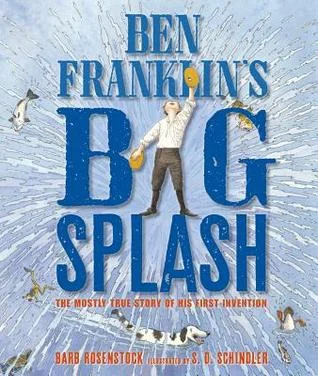
However, other books, particularly narrative biographies are often a bit harder to classify. Barb Rosenstock clearly identifies in her author's note that Ben Franklin's Big Splash: The Mostly True Story About His First Invention is historical fiction. Her reasoning had a lot to do with the inclusion of what is referred to as "invented speech".  I appreciated her thoughts on this and because she was so thorough in her research there was a part of me willing to allow the invented speech and include this in a nonfiction classification. Sometimes dissonance is a good thing.

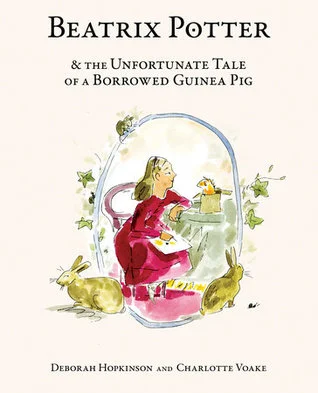
In her author's note for Beatrix Potter & The Unfortunate Tale of a Borrowed Guinea Pig, Deborah Hopkinson clearly establishes that the book, though inspired by real events, is fiction. One of the events referred to in the book features a young Beatrix Potter borrowing a guinea pig from a neighbor, when in reality Potter was 26 at the time. For some reason, the changing of the age of the character was more significant to me than inventing dialogue. So, I was more inclined to agree with Hopkinson's placement of the book into the fiction category than nonfiction classification.  However, what if someone hadn't read the author's note? The questions continued.  

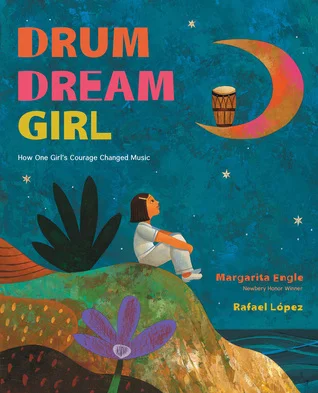
In some conversation or blog post or facebook comment that I read, Margarita Engle clearly indicated that Drum Dream Girl was fiction. In her author's note, she writes about how the book is inspired by the very real Millo Castro Zaldarriaga. 

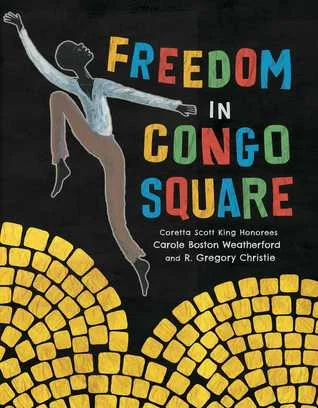
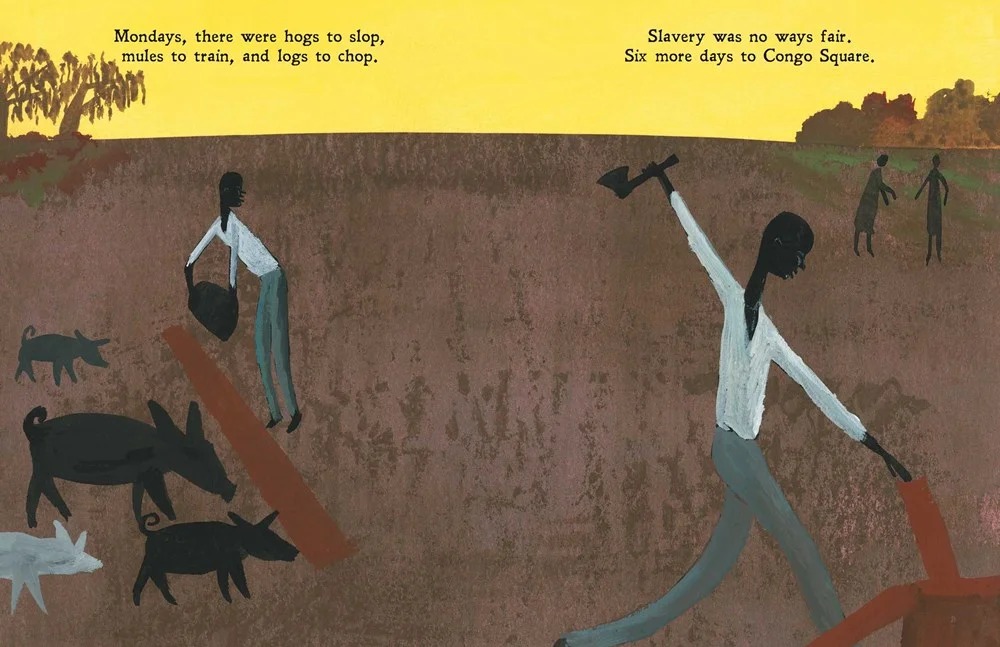
Recently, I read Freedom in Congo Square by Carole Boston Weatherford. The book begins with a forward by historian Freddie Williams Evan. The text is in a poetic writing style, and Weatherford provides an author's note at the end. 

Though I truly love both Drum Dream Girl and Freedom in Congo Square, and both feature a poetic style, and both are technically inspired by a real person/event, how does the average reader determine what is fiction vs. nonfiction? Other than what the author shares or how a publisher promotes a book, what can teachers and students use to evaluate the text? 

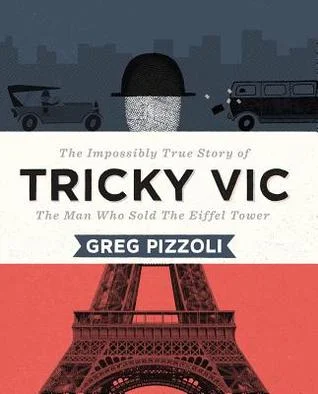
And finally, one of the most popular choices I saw on 2016 Mock Sibert Award lists was Greg Pizzoli's Tricky Vic.  Pizzoli explains the struggle he faced in finding the truth when researching the life of a con artist. And like Rosenstock's Ben Franklin's Big Splash, I was willing to be more lenient in my criteria. Am I just a softie for these books that I have enjoyed and appreciate the author's recognition of the difficulty confirming certain facts?

In her Kirkus article, The Stories In Between, Julie Danielson looks at the issue of invented dialogue or the shifting around of facts particularly in connection with Pizzoli's Tricky Vic and Hopkinson's Beatrix Potter. Danielson brings up the issue of an author acknowledging in the author's note the liberties he or she has taken.  However, is it simply a matter of the author acknowledging his or her research and where liberties were taken or is there a higher standard in which the bar should be set? Hopkinson has clearly come out stating that Beatrix Potter is fiction, yet, in looking on WorldCat.org, the classification is listed as Juvenile Literature, which is typically a classification used for nonfiction titles.  

At the moment, I do not have any real answers to the questions I raised in this post. Mostly, I continue to have questions. When author's utilize speech bubbles, should the dialogue included there be tied to actual research? For children, will they assume that if it is in a book or placed in a speech bubble then the individual actually spoke those words? What are the responsibilities of teachers and librarians to do their own fact checking and research? When does a book cross from nonfiction to fiction? Is informational text a legitimate category? And if so, how much fiction is allowed in an informational book? Do we allow more wiggle room when writing children's nonfiction than we do in writing adult nonfiction?  

In many ways, I love that teachers, librarians, students, authors, and illustrators can even have this discussion. There was a time in children's nonfiction (particularly with picture books) that books did not include back matter or author's notes or other references. The fact that they now include this information is progress and opens the door for these discussions.

I want to encourage those that come to this post to engage in friendly, respectful discussion. Comments, if respectful of others, are welcome. 

Note:  I have not intended to misrepresent any of the authors and their books listed in this post. If any corrections need to be made, please email me at kidlitfrenzy@gmail.com and I will make the needed corrections.  Additionally, all of the books listed here are ones that I have in my personal library and the authors are writers that I admire.

Don't forget to link up your nonfiction reviews: