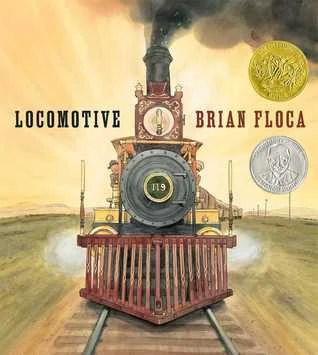
This is a very different blog post than I usually write for the Nonfiction Picture Book Challenge. However, it has been on my mind a lot recently. It started the year that Locomotive won a Sibert Honor. If I made bets, I would have put money on it not winning a Sibert. In my mind, it was a beautifully illustrated and clearly a well researched historical fiction book, or at least that is what I thought. Then recently, I heard someone mention in a discussion around the Sibert about how much fiction is allowed for it to be considered Informational or Nonfiction? I have to admit I had a moment of shock. With my tendency to "put my foot in my mouth", I wisely kept my mouth shut and filed it away as something to ponder.
When I first started reading nonfiction picture books, I never really thought about the lines between fiction, nonfiction, and informational text. If a book had made up characters but was set in a historically accurate time period, it fell into historical fiction. But this was about as far as I went with the distinction. And I personally was very liberal with what I would classify as informational. In the beginning, I have to admit, I barely read the back matter. However, there is this funny thing about reading lots and lots of books in a particular genre, and learning to read the author and illustrator notes at the end of the books, and listening to authors and illustrators talk about their books and research and decisions they made, questions come up. Pesky questions that make you think as you read. And ultimately, those are the best kind of questions.
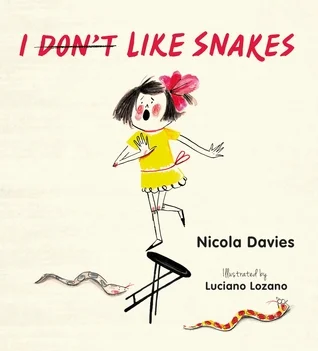
The questions that started to come up had to do with where does an author draw the line between a book being nonfiction or fiction. Clearly, some books have a bit of both. Nicola Davies often writes books with a clear fictional narrative running through the book but provides expository facts, often in a different font, on each page as a compliment to the narrative.
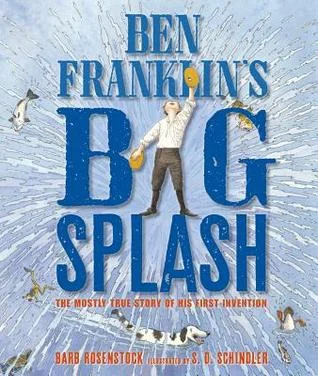
However, other books, particularly narrative biographies are often a bit harder to classify. Barb Rosenstock clearly identifies in her author's note that Ben Franklin's Big Splash: The Mostly True Story About His First Invention is historical fiction. Her reasoning had a lot to do with the inclusion of what is referred to as "invented speech". I appreciated her thoughts on this and because she was so thorough in her research there was a part of me willing to allow the invented speech and include this in a nonfiction classification. Sometimes dissonance is a good thing.
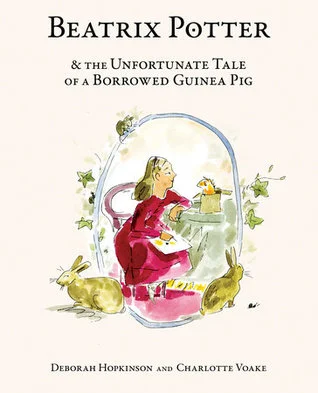
In her author's note for Beatrix Potter & The Unfortunate Tale of a Borrowed Guinea Pig, Deborah Hopkinson clearly establishes that the book, though inspired by real events, is fiction. One of the events referred to in the book features a young Beatrix Potter borrowing a guinea pig from a neighbor, when in reality Potter was 26 at the time. For some reason, the changing of the age of the character was more significant to me than inventing dialogue. So, I was more inclined to agree with Hopkinson's placement of the book into the fiction category than nonfiction classification. However, what if someone hadn't read the author's note? The questions continued.
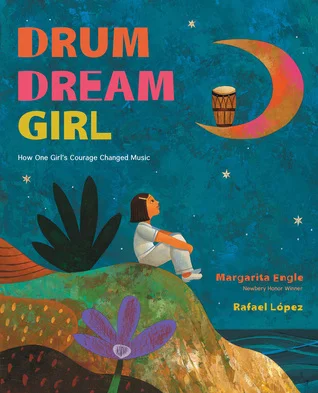
In some conversation or blog post or facebook comment that I read, Margarita Engle clearly indicated that Drum Dream Girl was fiction. In her author's note, she writes about how the book is inspired by the very real Millo Castro Zaldarriaga.
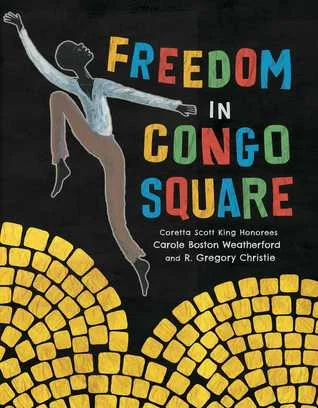
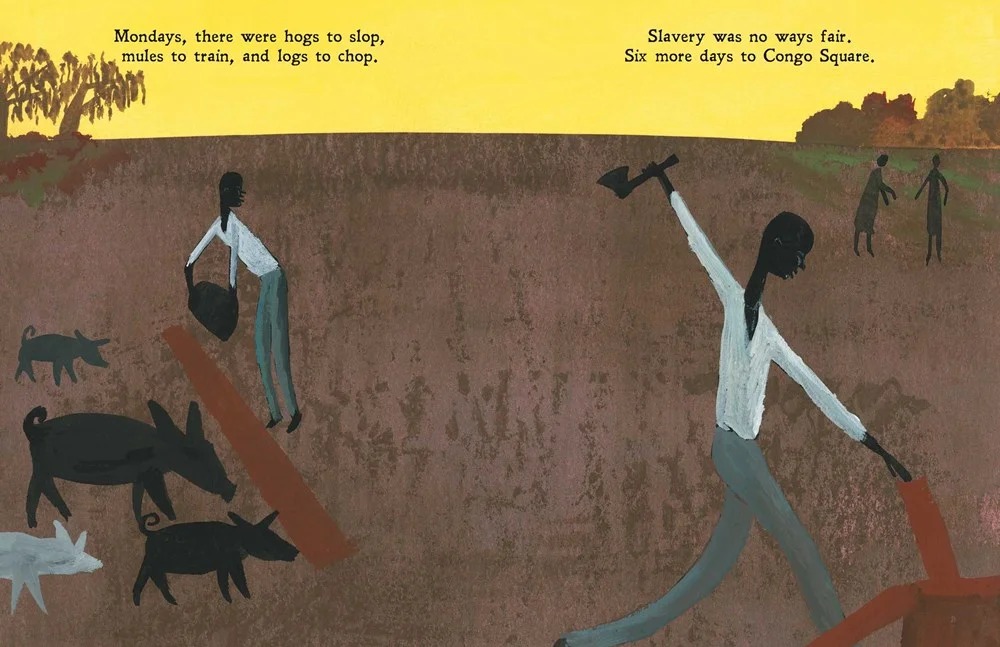
Recently, I read Freedom in Congo Square by Carole Boston Weatherford. The book begins with a forward by historian Freddie Williams Evan. The text is in a poetic writing style, and Weatherford provides an author's note at the end.
Though I truly love both Drum Dream Girl and Freedom in Congo Square, and both feature a poetic style, and both are technically inspired by a real person/event, how does the average reader determine what is fiction vs. nonfiction? Other than what the author shares or how a publisher promotes a book, what can teachers and students use to evaluate the text?
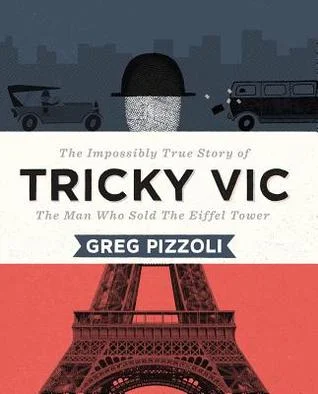
And finally, one of the most popular choices I saw on 2016 Mock Sibert Award lists was Greg Pizzoli's Tricky Vic. Pizzoli explains the struggle he faced in finding the truth when researching the life of a con artist. And like Rosenstock's Ben Franklin's Big Splash, I was willing to be more lenient in my criteria. Am I just a softie for these books that I have enjoyed and appreciate the author's recognition of the difficulty confirming certain facts?
In her Kirkus article, The Stories In Between, Julie Danielson looks at the issue of invented dialogue or the shifting around of facts particularly in connection with Pizzoli's Tricky Vic and Hopkinson's Beatrix Potter. Danielson brings up the issue of an author acknowledging in the author's note the liberties he or she has taken. However, is it simply a matter of the author acknowledging his or her research and where liberties were taken or is there a higher standard in which the bar should be set? Hopkinson has clearly come out stating that Beatrix Potter is fiction, yet, in looking on WorldCat.org, the classification is listed as Juvenile Literature, which is typically a classification used for nonfiction titles.
At the moment, I do not have any real answers to the questions I raised in this post. Mostly, I continue to have questions. When author's utilize speech bubbles, should the dialogue included there be tied to actual research? For children, will they assume that if it is in a book or placed in a speech bubble then the individual actually spoke those words? What are the responsibilities of teachers and librarians to do their own fact checking and research? When does a book cross from nonfiction to fiction? Is informational text a legitimate category? And if so, how much fiction is allowed in an informational book? Do we allow more wiggle room when writing children's nonfiction than we do in writing adult nonfiction?
In many ways, I love that teachers, librarians, students, authors, and illustrators can even have this discussion. There was a time in children's nonfiction (particularly with picture books) that books did not include back matter or author's notes or other references. The fact that they now include this information is progress and opens the door for these discussions.
I want to encourage those that come to this post to engage in friendly, respectful discussion. Comments, if respectful of others, are welcome.
Note: I have not intended to misrepresent any of the authors and their books listed in this post. If any corrections need to be made, please email me at kidlitfrenzy@gmail.com and I will make the needed corrections. Additionally, all of the books listed here are ones that I have in my personal library and the authors are writers that I admire.
Don't forget to link up your nonfiction reviews: