Nonfiction Picture Book Wednesday: TCRWP Units of Study

Recently, my reading life has become centered around the new Units of Study for Teaching Reading from Lucy Calkins and the team at Teachers College Reading and Writing Project. 

I am thrilled to have the opportunity to spend the week in New York City at the Coaching Institute for Reading at Teachers College.  It is an amazing opportunity and I was fortunate to be accepted into the Institute as well as be a part of a team sent to the training by my school district. 

Though I don't have a regular blog post for today, please know that I haven't forgotten about nonfiction picture books. Just last week, I had the opportunity to spend time with second and third grade teachers planning out the Writing Unit for Information Writing. Before I left, I pulled together my bins of nonfiction picture books that these teachers could borrow in order to immerse their students in the wonder of nonfiction books and to use these books as mentor texts. 

In addition to reading the Units of Study in preparation for the Coaching Institute, I have also been reading WRITERS AS READERS by Lester Laminack and Reba M. Wadsworth. 

So, what are you reading and how are you sharing them with young readers? 

Don't forget to link up your reviews:

Nonfiction Picture Book Wednesday: Concept Books

I love concept books. I think this started when I was teaching in an inclusion preschool classroom. As a teacher, I was constantly searching out books that I could share with children. Books that would creatively introduce or reinforce concepts that we were talking about in class. I quickly learned that not all concept books are the same. Some are brilliant and others less than stellar.  And many times you can have too many alphabet or counting books. Yet, when done well, I always want to add them to my collection. 

Here are two recent releases that have a creative concept that is smartly executed. 

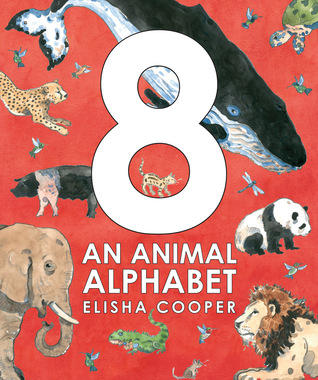
8: An Animal Alphabet Book
by Elisha Cooper
Orchard Books/Scholastic (July 2015)
IndieBound | WorldCat

If you read nothing else on this book, you need to check out the post on Seven Impossible Things Before Breakfast, here

Elisha Cooper's 8: An Animal Alphabet Book introduces to readers to familiar and not so familiar animals for all of the letters of the alphabet. A special pictorial guide at the end provides younger readers and the adults in their lives with an alphabetical listing of all of the animals. On every page, there is one out of all of the animals that is repeated eight times. Children are encouraged to find the animal and count up to 8.  

My next choice may seem like a fiction picture book and well, technically it is a fictional adventure book centered around two mice as the main characters. Certainly, it is a book for toddlers and preschoolers.  It even comes in an adorable smaller square size. However, it made me fall in love with Ruzzier for more than just his art. There was a genius in the way it introduced counting up to three and back from three. When I finished reading it, I smiled. It was fun, and witty, and did something I wasn't expecting.

Two Mice
by Sergio Ruzzier
Clarion Books (September 2015)
IndieBound | WorldCat

Two Mice by Sergio Ruzzier begins with one house, two mice and the fun grows from there.  

And some of the fun is simply in the illustrations.

So, what are some of your favorite abc and number books that are must adds to your collection, and how have you used them?

Don't forget to link up your nonfiction reviews:

Nonfiction Picture Book Wednesday: Favorite Nonfiction Read Alouds

Recently, I shared a couple of blog posts on teachers as readers of fiction and nonfiction books for children.  One of the challenges preventing teachers from including more nonfiction in classroom read alouds tends to be general readability of a book (or the perception of nonfiction readability), which is why many teachers stick with more narrative style nonfiction books like biographies or historical nonfiction (or historical fiction) dealing with important events in history. 

However, expository nonfiction when done well, can inform as well as reach out and pull-in readers as effectively as narrative prose. The titles below are excellent examples of books that will have students asking for teachers to read them again or asking to borrow them.

Creating a list of books for anything always makes me a bit nervous. If you asked me tomorrow, what I would recommend, it could be a completely different list. The list would change depending on the parameters given and what teacher or parent or librarian asked for a list. As a result, I have a few parameters that I worked with for this list. I limited myself to science-themed picture books by authors who have multiple titles for teachers and librarians to explore and they needed to be published since 2010.  There is also a range in grade levels for the books included. When thinking about this list, think about it as a place to start.

Finally, I needed to play around a bit with favorite titles. I might have wanted to include a book by an author and then realized it was older than 2010, which resulted in swapping out another title of an equally beloved book. 

Here are some of my favorite science-themed picture books to engage readers during a read aloud time:

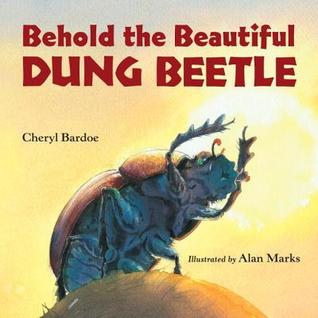
Behold the Beautiful Dung Beetle by Cheryl Bardoe; Illustrated by Alan Marks (Charlesbridge, 2014)

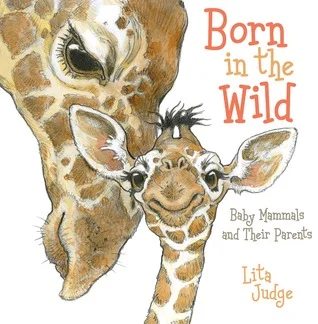
Born in the Wild: Baby Mammals and Their Parents by Lita Judge (Roaring Brook Press, 2014)

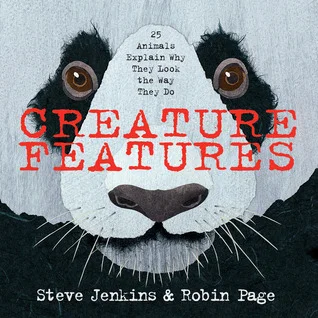
Creature Features: 25 Animals Explain Why They Look the Way They Do by Steve Jenkins & Robin Page (HMH Books for Young Children, 2014)

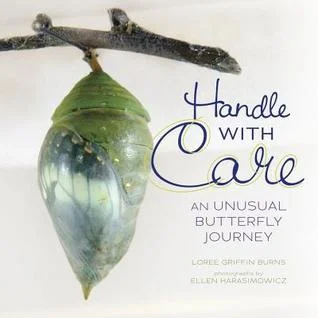
Handle With Care: An Unusual Butterfly Journey by Loree Griffin Burns (Millbrook, 2014)

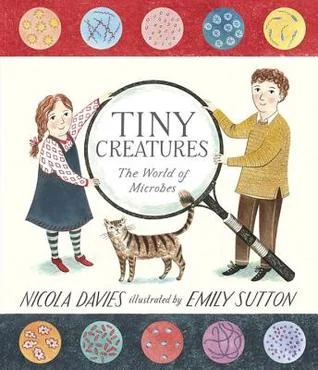
Tiny Creatures: The World of Microbes by Nicola Davies; Emily Sutton (Candlewick Press, 2014)

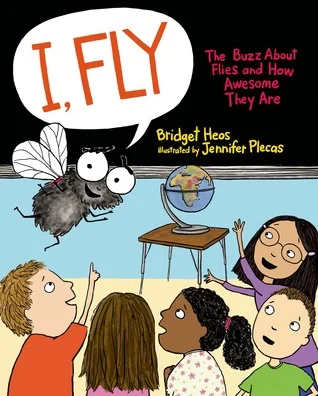
I, Fly: The Buzz About Flies and How Awesome They Are by Bridget Heos; Illustrated by Jennifer Plecas (Henry Holt & Co, 2015)

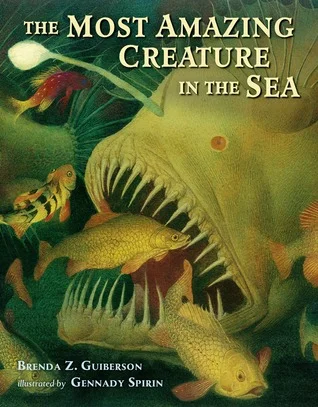
The Most Amazing Creatures in the Sea by Brenda Z. Guiberson; Illustrated by Gennady Spirin (Henry Holt & Co, 2015)

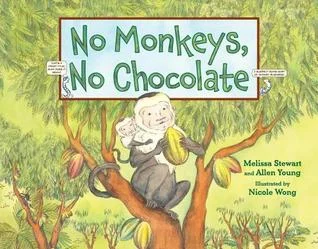
No Monkeys, No Chocolate by Melissa Stewart and Allen Young; Illustrated by Nicole Wong (Charlesbridge, 2013)

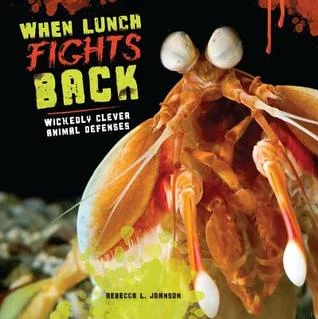
When Lunch Fights Back: Wickedly Clever Animal Defenses by Rebecca L. Johnson (Millbrook, 2014)

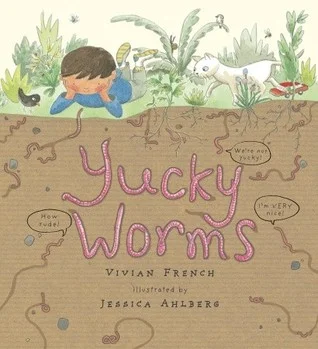
Yucky Worms by Vivian French; Illustrated by Jessica Ahlberg (Candlewick Press, 2010)

Longer than your average picture book:

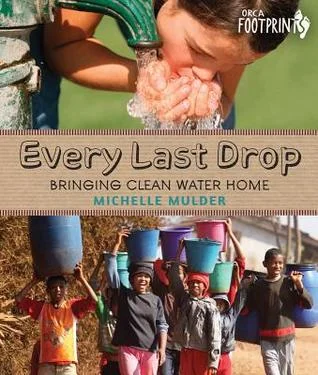
Every Last Drop: Bringing Clean Water Home by Michelle Mulder (Orca Publishers, 2014)

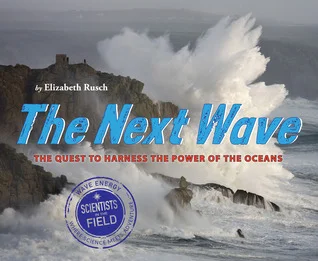
Next Wave: The Quest to Harness the Power of the Oceans (Scientist in the Field Series) by Elizabeth Rusch (HMH Books for Young Readers, 2014)

Exception to the rules - authors who at the time of this list do not have more than one book:

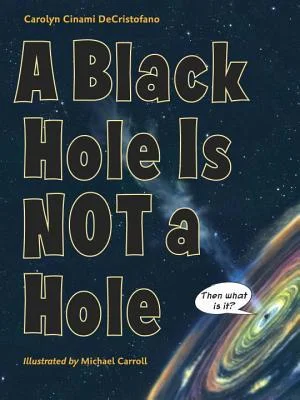
A Black Hole is Not a Hole by Carolyn Cinami Decristofano; Illustrated by Michael Carroll (Charlesbridge, 2012)

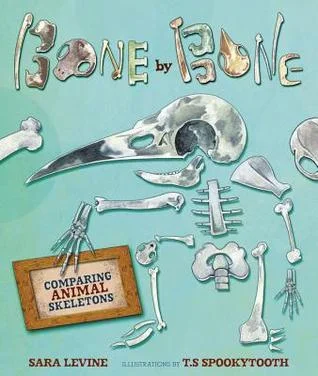
Bone by Bone: Comparing Animal Skeletons by Sara Levine; Illustrated by T. S. Spookytooth (Millbrook, 2013)

Note: Future blog posts will look at various ways of approaching nonfiction books as read alouds. 

Don't forget to link up your nonfiction reviews:

Nonfiction Picture Book Wednesday: Reading and Reading Aloud Nonfiction

Recently, I wrote a post about Why I Believe Every Teacher Must Be a Reader! I was tempted to call this post Why I Believe Every Teacher Must Read Nonfiction! but as I thought about it, the issue is so much greater when it comes to nonfiction and nonfiction in the classroom. It is not just the issue of reading nonfiction, which is part of it, but also reading aloud and sharing nonfiction, and the types of nonfiction that we share with students.

As I shared in my previous post that if students were to love reading and grow as readers, then teachers need to read. However, nonfiction poses some new challenges to this whole equation. Most booksellers, librarians and teachers seem to prefer to read fiction. If you go to a teacher night at a bookstore, check out how many of the books are actually nonfiction? Usually, not that many in comparison to the number of fiction books listed.  If there are some nonfiction books mentioned, they tend to be more narrative in writing style and focus on history and social studies. However, there is a vast variety of quality trade nonfiction picture books and longer form books that will inform, and delight readers of all ages and these books are just waiting to be uncovered.

In order to share nonfiction with children, teachers need to be exposed to new books and allowed time to explore and read them.  With budget cuts impacting both the human resources such as children's librarians and physical resources in terms of purchasing new books, learning about these books is exponentially more challenging than it is to find out about new fiction titles.  Even when there is a librarian available, s/he may not know how to select quality children's nonfiction and may be dependent on what is presented by vendor sales reps who might be suggesting formulaic nonfiction series.  

Where does a teacher turn to in order to unearth the wealth of nonfiction that is out there?  What steps can you take to discover this world of children's nonfiction?

Tips for getting started with reading more children's nonfiction:

  1. Just like with fiction, set a goal to read more children's nonfiction. Even one new nonfiction book a week or a month will expose you to a world of new books. And you will be amazed by the richness and depth that can be found in the world of children's nonfiction these days. As you read, you will discover more and more books that will be a perfect match with children you work with and support instructional goals.
  2. Follow blogs like The Nonfiction Detectives or the Nonfiction Picture Book Challenge (right here on Wednesdays) to learn about new book releases or to see how other teachers and librarians are incorporating nonfiction into their reading lives and classrooms.
  3. Explore new to you titles on lists like the Robert F. Sibert Award (ALA) list or the Orbis Pictus Award (NCTE) or NSTA's Outstanding Trade Books list to name a few.  The books on these lists are carefully considered and selected by committees who read widely in the area of nonfiction.
  4. Connect on-line with other teachers and librarians through things like GoodReads or Twitter (#nfpb2015). 

Five considerations for including nonfiction as a read aloud

1.  If you are hesitant to begin with nonfiction as a read aloud, look to narrative nonfiction stories such as biographies as a place to start. As one example, you can use a biography like Pablo Neruda Poet to the People by Monica Brown as an introduction to a fiction read aloud like The Dreamer by Pamela Muñoz Ryan. 

2.  Hybrid books that blend a narrative fiction story with accompanying expository facts can provide a teacher with the comfort of reading a story while introducing students to fascinating information, as well as different writing styles.  Nicola Davie's new book I (Don't) Like Snakes is a great example of this. 

3.  Expository nonfiction has been changing and high quality expository nonfiction is rich with descriptive language and engaging topics. Just pick up a book like A Nest is Noisy by Dianna Hutts Aston to see what I mean.

4.  Nonfiction can sometimes lend itself to shorter read alouds. If you only have a few minutes to read aloud, try something like Creature Features by Steve Jenkins. You can read 1 or 2 questions and their corresponding responses in the few minutes before lunch or during a transition point. 

5.  Finally, consider using nonfiction as mentor texts to explore writing styles and structures with students. Not only can this help students understand the craft of writing nonfiction but can provide student writers with outstanding examples of writing. Melissa Stewart's careful choice of words in Feathers: Not Just for Flying provide students with an exceptional model for writing simile. 

Check back next week for a list of some of my favorite nonfiction read alouds.  

Don't forget to link up your nonfiction reviews