Nonfiction Picture Book Wednesday: The Excitement of Sharing Nonfiction Books with Teachers

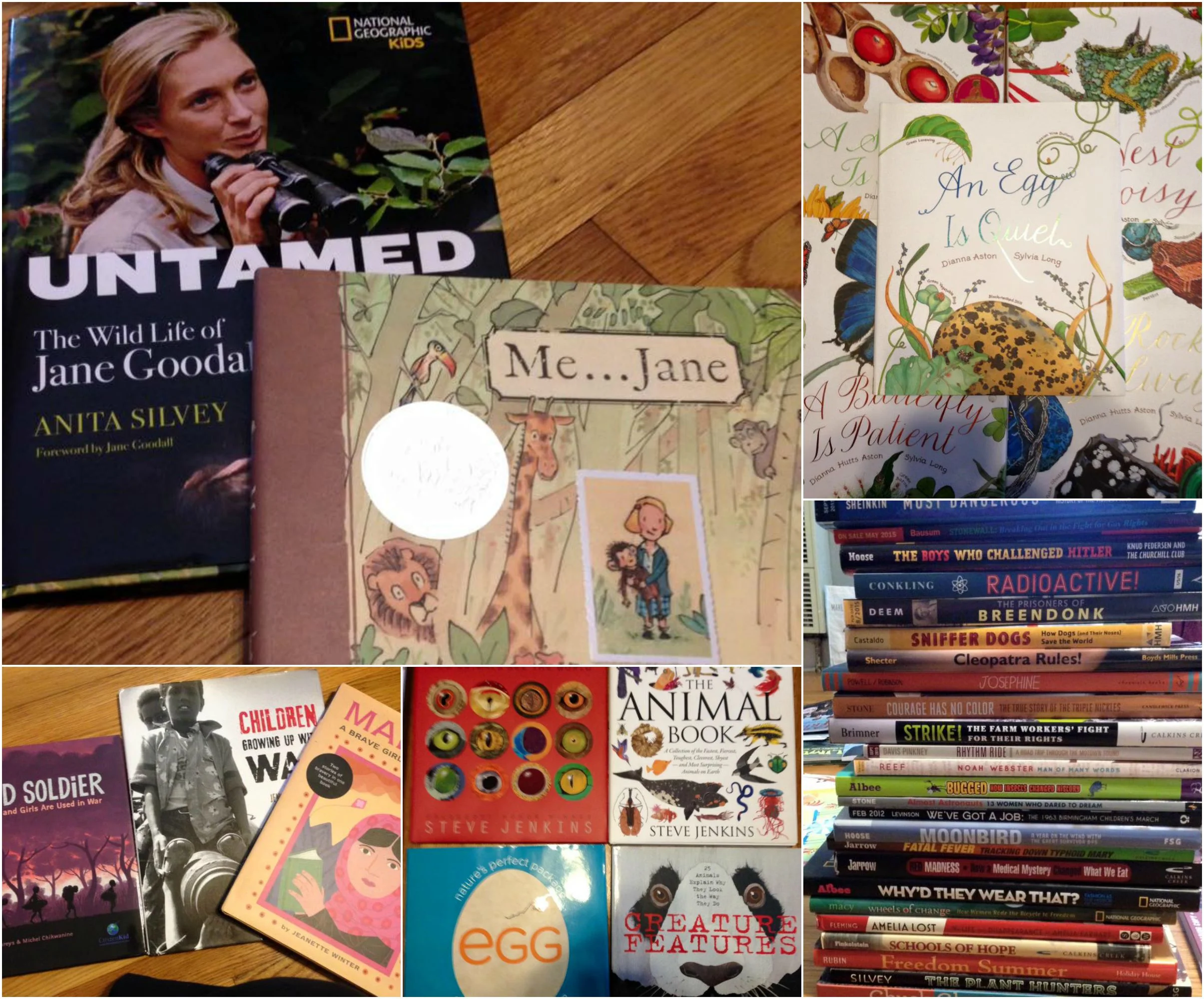
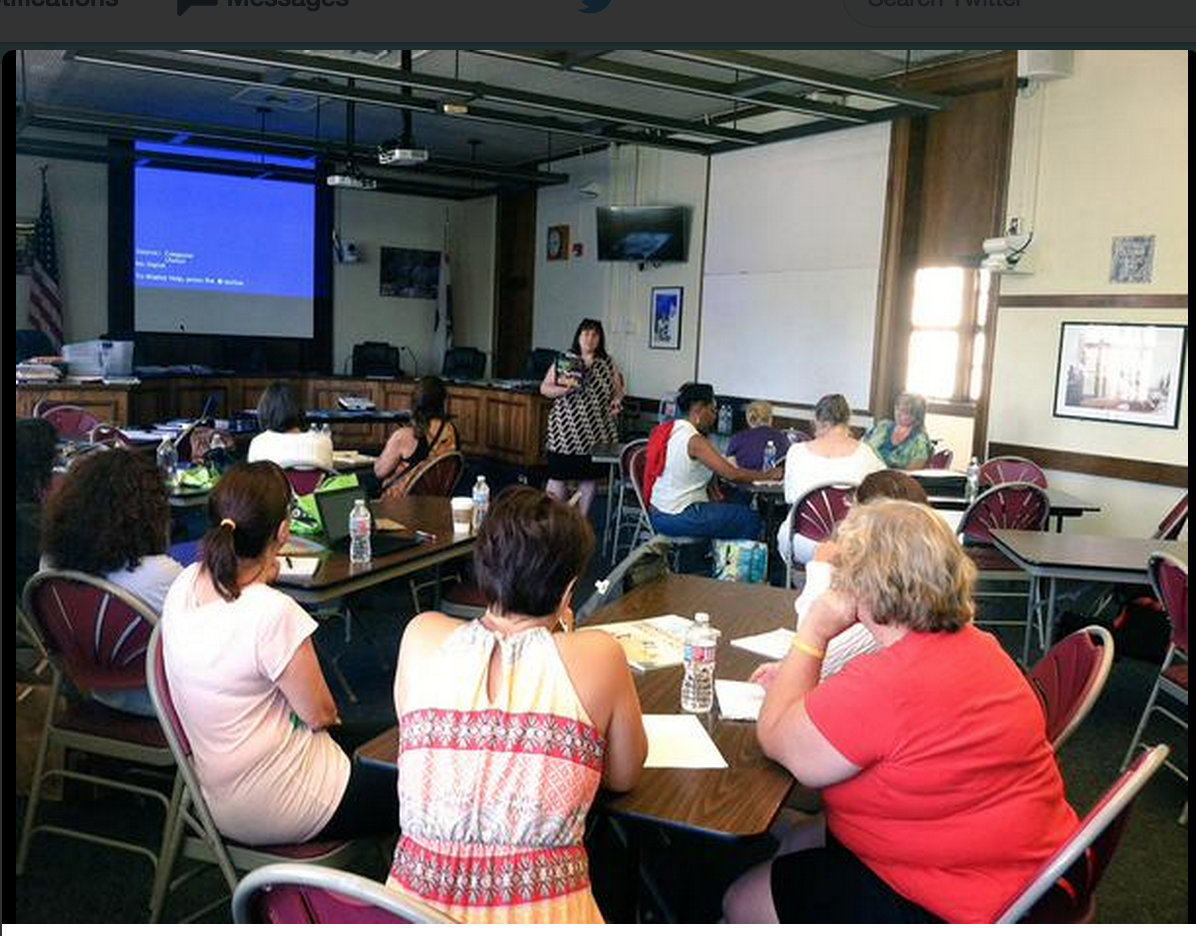
On Monday, I led a professional development training on Using Nonfiction Picture Books as Mentor Texts for Writing. This was the second time I led this training and each time I had similar responses by teachers. A certain "awww" descends over the group when they see all of the quality nonfiction books that I carefully select for the training.

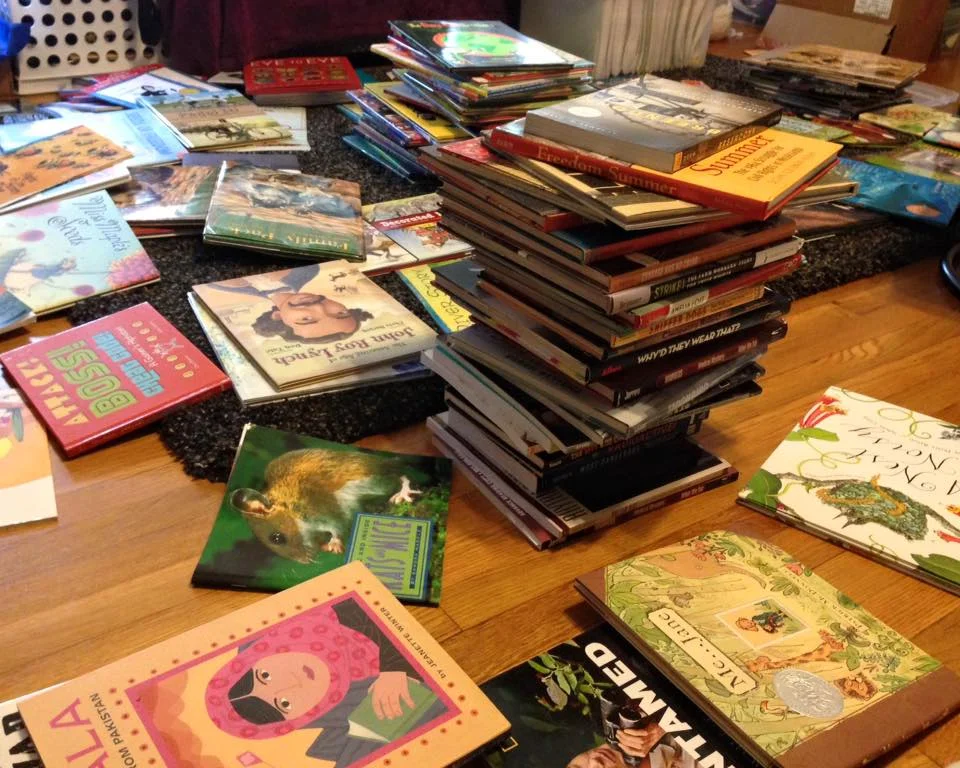
As I prepared for the training, I sorted and stacked and re-stacked and re-arranged books in an effort to select a range of books for different reading levels, interest levels, writing styles, and writing structures.  Since I was not exactly sure how many teachers would show up on the Monday before school started, I debated on the number of books to bring. I needed enough for them to have a stack of books for each activity. This is what the floor of my room looked like as I prepared to sort and pack books.

I started to sort by similar topics or by author or by series.  Additionally, I considered the purpose of the training and though it was for K-8 teachers, I knew I had at least one high school teacher that planned on attending. At that point, I pulled out a stack of long-form nonfiction and filled one tub with just books for older readers.

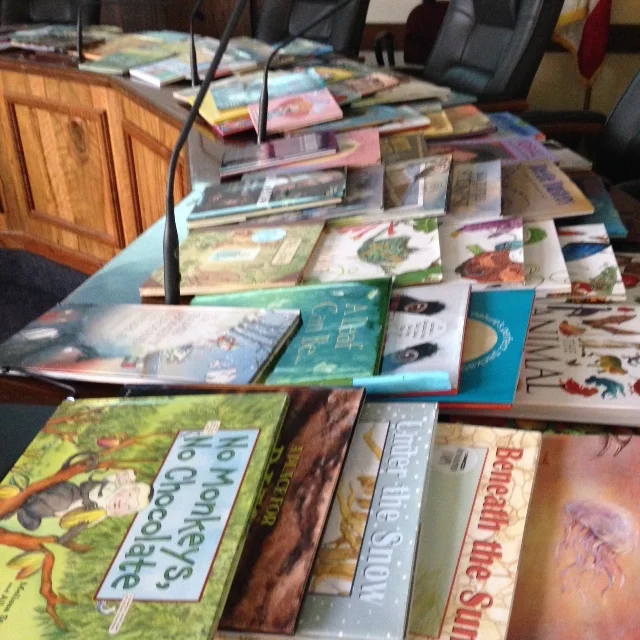
The training was scheduled for our Board Room. I used the area where Board Members sit to display the books. The books literally went from one end to the other. 

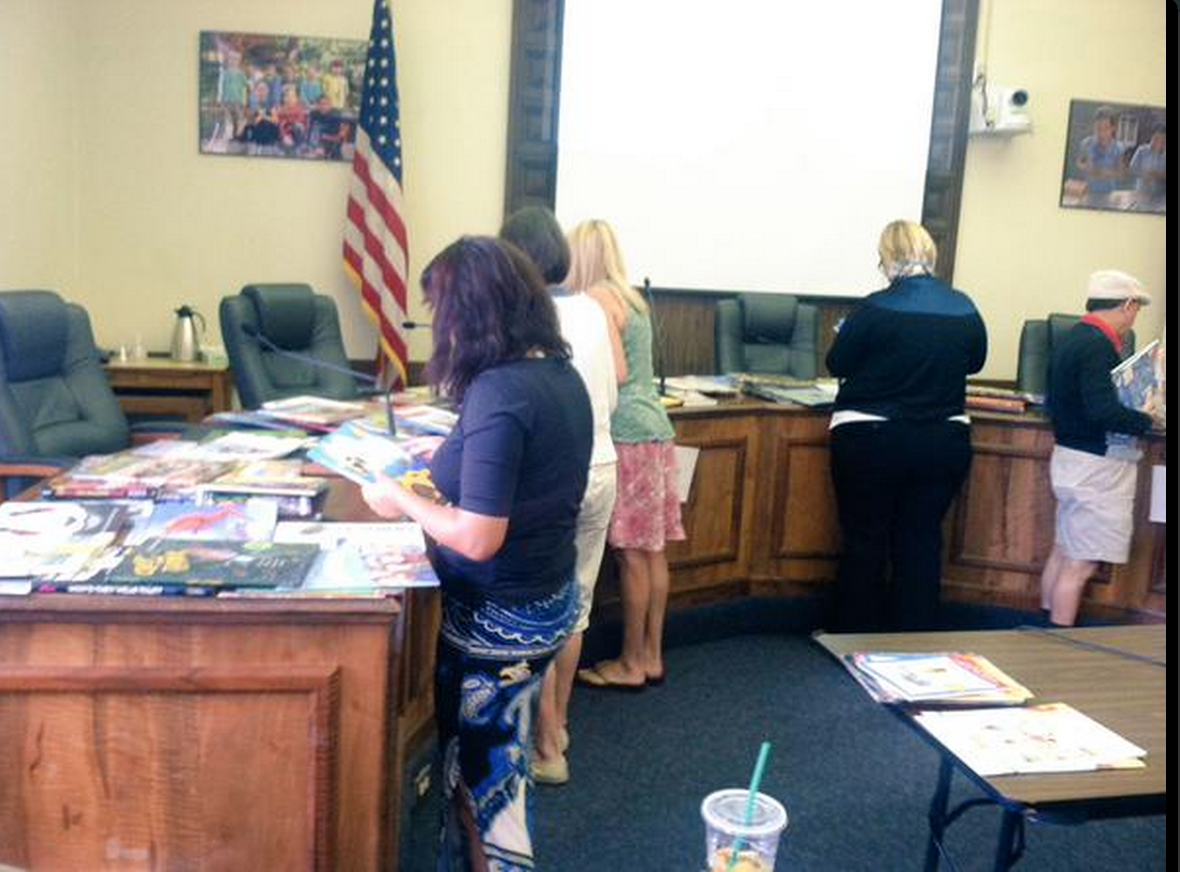
As part of the morning activities, I provided two times to just select a stack of books and read them and think about the writing style and structure used in each book and how children would learn from these books. An undercurrent of excitement flowed through the group as they browsed and selected books to look at more closely.

Sometimes, I would see a book that the group had overlooked and would pull it out and show a teacher how it paired well with one that she had in her stack. Other times, I would share other titles by an author that they were inquiring about. There was no shortage of conversations about books in the room that morning.

Despite the three hours scheduled for the training, we ran out of time. There were so many books to talk about and discuss. At the end, I had to cut out a few of the writing exercises. However, we did get to a poetry exercise that matched up with Joyce Sidman's Winter Bees and Other Poems of the Cold.  It was exciting to see a few teachers who claimed to not like poetry write some wonderful poems about the fox on the cover of the book. 

In the end, what I came away with was the numerous comments about not knowing that these books existed and how incredible they were and where could they get some of them. Fortunately, we have a well-stocked public library and a great indie in town that carries many of the titles I was sharing. However, I was truly reminded that teachers need exposure to quality nonfiction. They need to spend time flipping through the pages, and to read sections of these books or hear about ways to use them in instruction. The more they learn about these amazing books the more they will seek them out and incorporate them into instruction. 

For each of us that participates in something like the Nonfiction Picture Book Challenge #nfpb2015, we need to keep reading and continue to share out. You are making a difference when you share out or book talk to colleagues, and in turn a child will benefit. 

Some thoughts on new or upcoming releases to share with teachers and librarians:

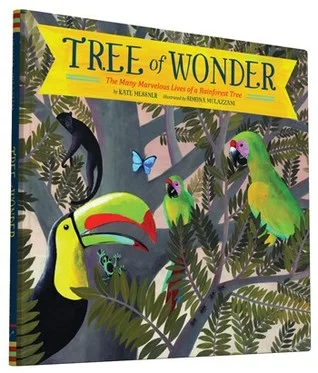
Tree of Wonder: The Many Marvelous Lives of a Rainforest Tree by Kate Messner; Illustrated by Simona Mulazzani (Chronicle Books, August 11, 2015) - Messner's newest picture book takes readers to the rainforest of Costa Rica and to the Almendro Tree. I realized that I have very few books on the rainforest in my collection and I am glad to add this concept book to my book collection. 

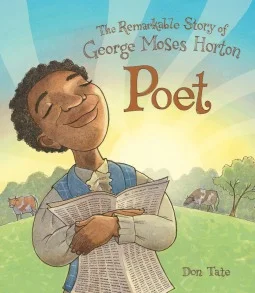
Poet: The Remarkable Story of George Moses Horton by Don Tate (Peachtree Publishers, September 1, 2015) - As a lover of books and reading, I am always amazed by stories of those who persevere and teach themselves to read (and write). Tate shares the story of a lesser known African American poet from the time pre-Civil War and shares the story. With beautiful illustrations, and engaging text, readers learn of the life and struggles and successes of George Moses Horton. 

Look for these books at your local indie bookstore or community library!

Don't forget to link up your nonfiction reviews:
Nonfiction Picture Book Wednesday: Children and War

Recently, I received books from two different publishers and I was surprised at the focus of each of the books. Both clearly addressed the issues of children and war, but did so in very different ways.  War is a difficult topic to explore with children. Often, the topic makes parents very uncomfortable. However, given the world in which we live, it is an important one and I am glad to have some book resources that I can share with children when needed. 

The first book is an autobiographical story written in an illustrated graphic novel format.  The second book is a photojournalist's account of the lives of children and families in the middle east and Africa.

Child Soldier: When Boys and Girls Are Used in War
Written by Jessica Dee Humphreys & Michael Chikwanine
Illustrated by Claudia Davila
Kids Can Press/Citizen Kid (September 1, 2015)
Audience: Ages 9 to 12 years
Biography * Children and War * Global Awareness
IndieBound | WorldCat
 

About the book
Michel Chikwanine was five years old when he was abducted from his schoolyard soccer game in the Democratic Republic of Congo and forced to become a soldier for a brutal rebel militia. Against the odds, Michel managed to escape and find his way back to his family, but he was never the same again. After immigrating to Canada, Michel was encouraged by a teacher to share what happened to him in order to raise awareness about child soldiers around the world, and this book is part of that effort. Told in the first person and presented in a graphic novel format, the gripping story of Michel's experience is moving and unsettling. But the humanity he exhibits in the telling, along with Claudia Dávila's illustrations, which evoke rather than depict the violent elements of the story, makes the book accessible for this age group and, ultimately, reassuring and hopeful. The back matter contains further information, as well as suggestions for ways children can help. This is a perfect resource for engaging youngsters in social studies lessons on global awareness and social justice issues, and would easily spark classroom discussions about conflict, children's rights and even bullying. Michel's actions took enormous courage, but he makes clear that he was and still is an ordinary person, no different from his readers. He believes everyone can do something to make the world a better place, and so he shares what his father told him: “If you ever think you are too small to make a difference, try sleeping in a room with a mosquito.”

Thoughts about this book:
When I saw the cover and title of this book, I wasn't sure what the book would be about or how it would discuss an issue like child soldiers.  I was intrigued to discover that the book was in a graphic novel format. Though the style of illustrations and text seemed appropriate for a bit younger audience, the topic seemed more suitable to a slight older audience. 

Told from the perspective of Michel Chikwanine from his abduction at the age of 5 in 1993, followed by his eventual escape, and continuing through additional challenges his family faced in battling against the Rebels in the Democratic Republic of Congo. Though Chikwanine's personal story has a positive outcome, this wasn't the results for all of his family members.  Chikwanine eventually immigrated to Canada where he lives today.

At the end of the book, readers will find current biographical information about Michel Chikwanine. Additionally, there is a series of questions and answers about children soldiers and a list of primary sources for further exploration. 

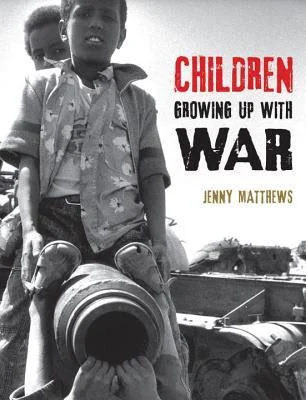
Children Growing Up with War
by Jenny Matthews
Candlewick Press (October 14, 2014)
Audience: Ages 10 - 14 years 
Photojournal * Children and War * Refugees
IndieBound | WorldCat

About this book
The right to adequate nutrition and medical care.
The right to free education.
The right to a name and nationality.
The right to affection, love, and understanding.

In conflict zones around the world, children are denied these and other basic rights. Follow photographer Jenny Matthews into refugee camps, overcrowded cities, damaged villages, clinics, and support centers where children and their families live, work, play, learn, heal, and try to survive the devastating impact of war. This moving book depicts the resilience and resourcefulness of young people who, though heavily impacted by the ravages of war, search for a better future for themselves, their families, and their cultures.

Thoughts about this book:
In 48 pages and 5 chapters, photojournalist Jenny Matthews takes readers on a journey through different countries (Lebanon, Afghanistan, Tunisia, Uganda, and more) and into the lives of children and families that have been impacted by the war around them.  The photographs and case studies span from 2006 to 2013. Though the photographs capture the lives of the individuals being presented, they are real without being overly graphic. However, the case studies and information are very real and can be emotionally challenging for some students.  Children Growing Up With War can be read multiple times in order to read the various text boxes and information within the pages of the book.

In the book, Matthews has elected to focus on categories such as homes and displacement, family, health, work, and school and play. Her back matter primarily contains websites, and a glossary. However, throughout her book she includes multiple text features including photographs, charts, maps, labels, and more.  

Though facing the realities of war can be difficult, both books, handle the topic of children and war in a sensitive but honest fashion and worth including in a classroom or school resource library. 

Don't forget to link up your nonfiction reviews: