What If...Two Best Friends Made a Book Together? - Guest Post & Giveaway

Helloooooo there, Alyson! Hellooooo, Kidlit Frenzy!

Thank you for being a part of our blog tour and for sharing our new book What If….

It’s a story about the indomitable spirit of human creativity to triumph over any circumstance, and we were beyond-beyond fortunate to make this book together.

Many times when you co-create a book with someone, you don’t know the other person, let alone have the opportunity to actually work together. Maybe the writer and illustrator live across the world from each other. Maybe they’ve never met and will never have the chance to meet. Maybe they speak different languages, and never talk during the whole book-making process. It doesn’t mean the book won’t be a wonderful collaboration, it just happens to be the way the process works a lot of the time. Each person does her/his part separately, while the publisher manages all communication.

But in this rare, rare, all-caps RARE example, we not only got to work on this book together, we got to work on this book together in the same room! And together on the phone! And together in New York and California and in Northampton, MA! And together in humor and spirit and sensibility. It was the experience of a lifetime, especially with a book that’s so near and dear to both of our hearts.

We have talked about how, in the case of What If…, there isn’t really a place where the text ends and the illustration begins. Or where the illustration exists without the text. They are holding hands on every page. If you take away one, the whole book changes. The relationship between what you read and what you see is like a harmony. Both Ella Fitzgerald and Louis Armstrong are amazing to listen to individually, but singing together, their songs become something else entirely. Entirely magical. (*incidentally, Ella and Louie duets are some of our favorite harmonies to sing, but you might be surprised which one of us sings which part!)

So making this book together was an incredibly unique and special experience. When either one of us reads the book, every single time, we both feel our friendship on every page. The book is not only a mindmeld collaboration, but also a memory bank of so many joyous times together creating it.

We remember reading the manuscript together for the first time during dinner at the Mermaid Inn.

Sam remembers each time we brainstormed, each time we had a big AH-HA! moment, and every gasp-worthy image Mike showed her along the way.

YAY! Photo credit: Jesse Klausmeier

Mike remembers when Sam went leaping down the beach when she first heard Little, Brown would be publishing it.

Sam remembers the day Mike called with the tremendous news, “DID YOU KNOW YOU CAN ORDER REAL AUTUMN LEAVES ONLINE?!?!”

© 2017 Mike Curato

Mike remembers when we spontaneously bee-lined it into Shutters on the Beach to celebrate doing the book together, with champagne and oysters...and more champagne and oysters. Sam remembers when Mike’s first sugar cube igloo collapsed and he was SO FRUSTRATED. Mike remembers when he showed Sam how his own reflection can be seen in the metal bowl on top of the rocketship and SHE COULD NOT GET OVER IT (she still can’t!).

© 2017 Mike Curato

Most of all, we will always remember how much we laughed while making this book. We are still laughing, and the book hasn’t even come out yet. We will be laughing all book tour long.

What are we laughing about right now?

We are joking about what the sequel to this book should be called:

  • WHATEVER.
  • WHATNOT
  • WHAT THE ----?!
  • “AAAAAND WUT.”
  • WHAT’S-A-MATTER WITH ME? EH? WHAT’S-A-MATTER WITH YOU?
  • AS IF?!?!

We are also joking about alternative author photos we could have used for this book:

Sketch of Sam by Mike, and “Mike-rophone” by Sam

And we are also joking about What If...some of our previous book titles had been combined. We might have:

  • Little Elliot, Big New Undies
  • Worm Loves WitchSpa
  • All the Way to Snoozefest
  • Crankenstein: Fall...Friend?
  • Martha Doesn’t Say Big Fun
  • Little Elliot, Bigger Bigfoot

by...
Micantha Berato and Sike Curber

Anyway, you get the point.

Nothing, and we do mean nothing, has been as much fun and as much of a joy as creating this book together.

It is the song of Sam’s soul. It is the beat of Mike’s heart. It is the highest note of our friendship (so far). We really hope you like it.

© 2017 Mike Curato

We’d like to thank our entire team at Little, Brown (all the “Little Brownies,” and particularly our awesome editor Andrea Spooner, her incredible assistant Hallie Tibbetts, constantly clever Designer Saho Fujii, and creative guru, Dave Caplan) for making this magic happen, believing in this book from the beginning, and helping us every step of the way. Much love to our outstanding Literary Agent, Brenda Bowen, for being Queen B (Queen Double B) to BBOTH of us.

And a giant standing O, big bravo, and roses throw, to you, Alyson, for hosting us here on Kidlit Frenzy, and for everything you do in the name of kids, books, and kids and books together.

-Samantha and Mike, Mike and Samantha

photo credit Leo Moreton

Please join us for the rest of The Official What If Blog Tour:

3/26 Nerdy Book Club: WHAT IF...We Told You the Story Behind the Story?

3/27 7 Impossible Things Before Breakfast: WHAT IF…Mike Curato Used Mixed Media to Make a Book?

3/28 Pragmatic Mom: WHAT IF...We Used Our Creativity to Overcome Obstacles?

3/30 Watch Connect Read: WHAT IF...We Revealed our New Book Trailer?

Enter here to win a copy of WHAT IF...


Nonfiction Picture Book Challenge: Women's History Month The Audiobook Edition

As I continue with my Women's History posts, I wanted to share with you several audiobooks that I have recently read with my ears or currently reading. Normally, my posts feature children's nonfiction but my love of nonfiction also encompasses adult nonfiction. Additionally, I discovered several years ago that I love listening to longer nonfiction. Sometimes the author is the reader for the audiobook, and sometimes the reader assumes the identity of the person who is the main focus of the book. In either case, I find this brings the book alive. The one thing about nonfiction that usually drives me back to the book in print is to see the photographs and other visuals that are included in the book and cannot be captured via audiobook. 

Here is what I am (or have finished) reading...

Who Thought This Was a Good Idea? And Other Questions You Should Have Answers to When You Work in the White House by Alyssa Mastromonaco with Lauren Oyler (Twelve, 2017/Hachette Audio, 2017) - This is the shortest of the three audiobooks featured in today's post and the most recent in terms of chronology. Mastromonaco providers readers/listeners with what led her to a career in politics and to eventually becoming President Barack Obama's Deputy Chief of Staff. Though I enjoyed the insider's viewpoint and her candidness and attempts at humor, I would have appreciated less hoping around in terms of the timeframe. 

Radium Girls: The Dark Story of America's Shining Women by Kate Moore (Sourcebooks, 2017/Highbridge Audio, 2017) - I first learned about the Radium Girls a few years ago as a historical reference in TV show I was watching that was set in the 1920's. I knew general information about the history of radiation and what I knew has always freaked me out a bit. Though Moore didn't relieve me of any of my radiation/radium fears, but she does succeed in putting faces and names to some of the women who were affected by their work as dial painters. Unfortunately, the outcomes for these women was not good, their strength and suffering led to a big win for worker's rights. 

From the Radium Girls website, there is a short biography on each of the young women from New Jersey and Illinois who filed against the United States Radium Company and Radium Dial Company. 

The Woman Who Smashed Codes: A True Story of Love Spies, and the Unlikely Heroine who Outwitted America's Enemies by Jason Fagone (Dey Street Books, 2017/Harper Audio, 2017) - Yes, I tend to have more than one book going at a time and given the intense nature of Radium Girls, I have balanced it out with a book that at times almost feels like the reader is swept up in a thriller and love story. Though I knew about the use of code breakers, particularly women during World War II, I didn't realize that there were code breakers going back to World War I. 

Check out this interview with author Jason Fagone in Forbes: Elizabeth Smith Freidman: 'The Woman Who Smashed Codes' 

If shorter listening ventures are more your style, then stop by my new favorite podcast, The History Chicks. The the audio quality can sometimes be a bit off, I love the banter between the two hosts, Beckett Graham and Susan Vollenweider. 

The most current episode puts the spotlight on Ada Lovelace. 

Episode 103: Ada Lovelace

What audiobooks are you listening to? 

Don't forget to link up your nonfiction reviews...

#Road2Reading Challenge: The Essentials #3 - The Role Observation Plays in Reading

Yesterday, I spent a day in a room full of educators discussing literacy instruction for middle school students with learning disabilities. As someone who has training in the areas of early childhood education, elementary education, and special education, I don't pretend to be an expert on middle school or secondary instruction. When I am in a room full of secondary educators, I tend to listen more than I speak. However, the more time I spend with my colleagues in the secondary world, I am convinced that many of the same techniques and strategies are needed to develop readers at any age. 

At the institute, the focus of the day was on Structured Literacy, a term the presenters were using to describe the type of reading instruction required for students with dyslexia to learn how to read. Many of my literacy friends talk about and support Balanced Literacy and advocate for providing students with choice in reading and writing. The Structured Literacy supporters tend to believe that the Balanced Literacy approach is not intentional enough to provide the kind of structure needed by children with special needs. 

With all of my years in teaching, especially working in an urban community with many students who are English Language Learners and also a significant population of students with learning challenges, I often think we are missing out on some critical things as we search for the panacea that will unlock the key to learning how to read for all children. Reading instruction needs to start with teachers who understand all the various components to reading, including motivation and a safe environment for learning.

Structured or explicit instruction is often scripted instruction or programs in a box. I have seen many teachers implement direct instruction but fail to understand how all of the components fit together or how to teach children to generalize what they are taught. I have also seen teachers who fail to understand how Balanced Literacy is not just "flying by the seat of my pants" but requires planning and intentionality. I learned the structured instruction as part of Special Education training and the Balanced Literacy as part of my general education training, but it was as an elementary principal that I learned how to put the two together. 

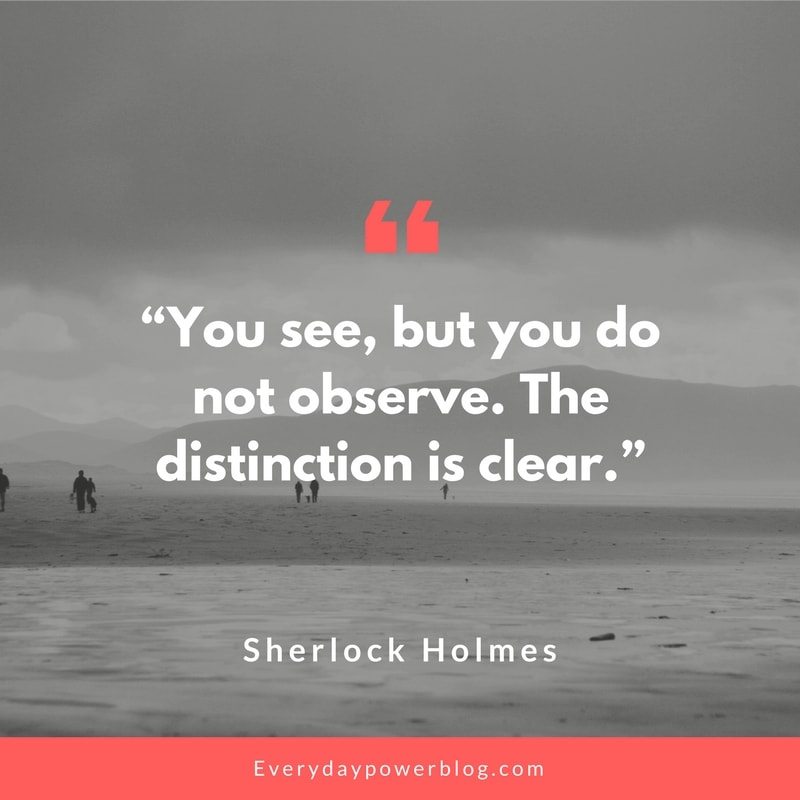
Regardless of where we fall as teachers, a key to putting the two sides together and helping all students learn to read is observation. Observation provides teachers with a tool that is extremely powerful and often under appreciated. Observation takes time and effort, which can be hard when you have a large number of students on your caseload. Effective observation means I need to actually make the time to listen to a student as she reads aloud or engage in conversations about what a child is reading or puzzle out what pieces are missing in his learning. Observation helps me understand how two students that score essentially the same on a reading assessment can be two extremely different readers requiring different strategies and instruction.  Observation also helps me to identify what motivates a reader and where their interests fall. And what I learn through observation will make the difference in how I pick books for read alouds or what activities I choose for word study or what questions I ask to help a student comprehend what they are reading. Next time, you have an opportunity to observe a student read, channel your inner Sherlock Holmes, and go beyond the obvious to the core of what your student needs. 

At the end of January, I started a series on several of the essentials needed to create a strong reading environment in order to build a reading culture in your classroom. If you are interested in reading the first post, you can check out here and a follow up post on reading aloud, here.  And  don't miss, Michele Knott had a fabulous read aloud post that you don't want to miss and can find here

All journeys have a starting place.
This is a weekly place to find books and tools
that you may use with readers at the start of their reading journey.
Join in the conversation at #road2reading.

Do you work with readers who are starting their journey on the road to reading?  Join Michele Knott from Mrs. Knott's Book Nook and myself every Thursday as we explore books and ideas to help readers have a successful start to independent picture book and chapter book reading. If you blog or have a Goodreads page, please link up with us!